
- Blog
- > Transfer Admissions
Transfer Scholarships and Financial Aid for Transfer Students
- Dr. Rachel Rubin
- | December 3, 2025

Transferring colleges can be both exciting and challenging for students seeking new academic opportunities. Transfer students often face unique considerations, from evaluating transfer credits to finding the best financial aid options and transfer scholarships. With rising tuition costs and increasing competition for Top 50 schools, understanding the availability of financial aid for transfer students and scholarship opportunities can significantly impact both short-term affordability and long-term success in higher education.
This guide explores strategies, tips, and resources for maximizing transfer scholarships, financial aid, and other opportunities for community college students, bachelor’s degree seekers, and undergraduate students making the transition to a new school.

Financial Aid for Transfer Students Is More Available Than You Think
Financial aid for transfer students works similarly to aid for incoming freshmen but often comes with specific requirements related to academic performance, transfer credits, and enrollment history. Community college students seeking to continue their education at a four-year institution should start by completing the Free Application for Federal Student Aid (FAFSA). This form assesses financial need and determines eligibility for federal student aid, including grants, loans, and work-study programs.
Merit-based financial aid is also an essential consideration. Many institutions offer transfer scholarships based on academic excellence, GPA, or demonstrated leadership. Transfer students who have completed a significant number of college credits, earned good grades, or participated in Phi Theta Kappa or other honor societies are often strong candidates for transfer merit scholarships.
Types of Transfer Scholarships
Transfer scholarships vary widely in scope and eligibility, ranging from awards for community college students to highly competitive scholarships for students with exceptional academic records. Community college excellence scholarships, such as the Jack Kent Cooke Foundation transfer scholarship, provide significant funding for students with strong academic goals and financial need. Other institutions, including the University of Miami, University of Maryland, Loyola University Chicago, and University of Kentucky, offer transfer merit scholarships or targeted scholarship programs for incoming transfer students.
Many scholarship programs require a demonstration of academic achievement, extracurricular involvement, leadership roles, and community service. Transfer students should carefully review scholarship applications, letters of recommendation, and essay contests to maximize opportunities. Additionally, some universities provide full-tuition scholarships or substantial financial aid packages to transfer students with outstanding academic records or unique accomplishments.
Community College Students and Transfer Opportunities
For community college students planning to pursue a bachelor’s degree, understanding available transfer scholarships is crucial. Many universities have specific scholarship programs for students transferring from two-year institutions. These scholarships often consider GPA, number of completed credit hours, and extracurricular achievements. Community college transfers who maintain academic excellence and actively engage in volunteer work, leadership positions, or internship programs are particularly competitive for these awards.
Students should also explore transfer scholarships that recognize Phi Theta Kappa membership, as this honor society often collaborates with four-year colleges to provide scholarship opportunities. By combining strong academic performance with targeted scholarship applications, community college students can reduce the cost of tuition while positioning themselves for success in their bachelor’s degree programs.
State and Federal Grants for Transfer Students
In addition to transfer scholarships, transfer students should explore state and federal grants, which provide critical financial support without the need for repayment. These grants are often based on financial need and academic standing, making them an essential component of financial aid for transfer students pursuing a bachelor’s degree.
Federal student aid programs, such as Pell Grants, offer funding for eligible college students who demonstrate financial need. Community college students planning to transfer to a four-year institution should ensure they complete the FAFSA early to maximize their eligibility for federal grants. These grants can cover a portion of tuition, fees, and even textbooks, helping to reduce the overall cost of a college education.
Many states also offer transfer-specific grants for community college transfers or undergraduate students with academic excellence. For example, community college students in New England and other regions may qualify for state-funded programs that support tuition for credit hours completed at a new school. These grants often consider GPA, course load, and financial need, making it essential for students to maintain good grades and track their high school and college transcripts carefully.
Scholarships for Specific Programs (e.g., ABSN, Evening, Online)
Transfer scholarships and financial aid for transfer students are not limited to general merit-based or need-based awards. Many institutions offer scholarships targeted at specific academic programs, including accelerated programs like ABSN (Accelerated Bachelor of Science in Nursing), evening programs for working college students, and online courses designed for flexible learning. These specialized scholarships are particularly valuable for transfer students seeking a bachelor’s degree while balancing other commitments.
For transfer students pursuing an ABSN program, scholarship opportunities often prioritize academic excellence, relevant volunteer work, and prior college credits. Community college students who have completed coursework in healthcare-related fields may be eligible for program-specific scholarships that reduce the cost of tuition and support the transition into a rigorous nursing curriculum. Universities like Loyola University Chicago and the University of Miami provide competitive scholarships to attract high-achieving transfer students into their specialized programs.
Evening and online programs also offer scholarship opportunities for transfer students who need flexibility in scheduling due to work or personal commitments. These scholarships recognize the unique challenges faced by undergraduate students balancing part-time employment, internships, or family obligations with their college education. Eligible applicants can often apply for merit-based awards, grants, or tuition assistance specifically earmarked for these non-traditional programs.
Additionally, some scholarship programs are tied to leadership roles, volunteer opportunities, or community engagement, giving transfer students multiple pathways to reduce tuition costs. Through these options, community college students and other transfer applicants can maximize financial aid, strengthen their academic portfolio, and align their education with long-term career goals.
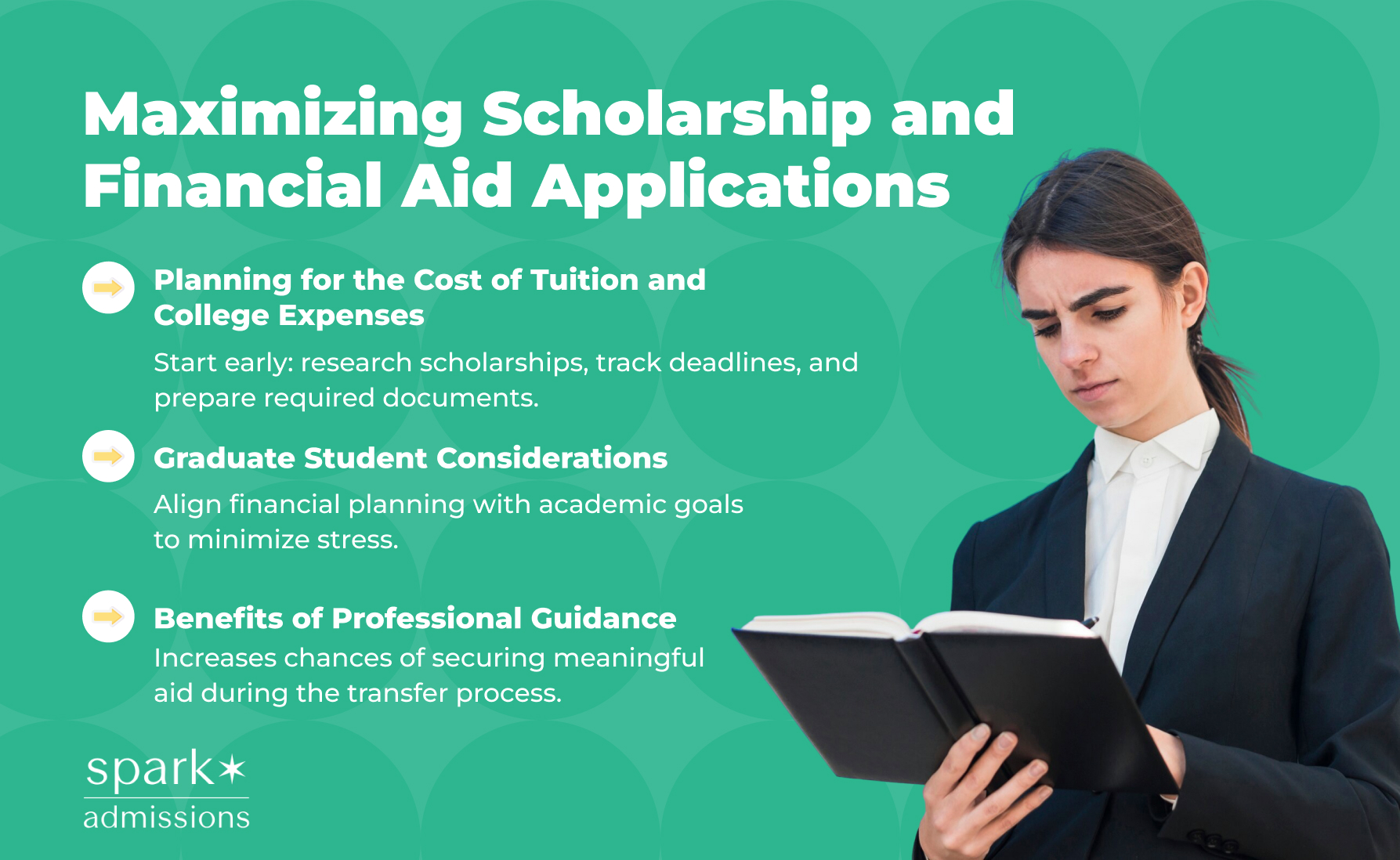
Maximizing Scholarship and Financial Aid Applications
Applying for financial aid and transfer scholarships requires organization, research, and strategic planning. Transfer students should start by identifying scholarship opportunities early, researching scholarship websites, and noting important deadlines for essay scholarship submissions and supporting documents. Maintaining a clear understanding of financial need, academic goals, and extracurricular involvement allows students to craft compelling scholarship applications.
Many transfer scholarships also emphasize leadership positions, academic excellence, and demonstrated commitment to a field of study. Students should use free application resources and work with school counselors or admissions consultants to review eligibility requirements, draft essays, and secure letters of recommendation. A well-prepared scholarship application can significantly improve the financial aid package and provide peace of mind when navigating the transition to a new school.
Planning for the Cost of Tuition and College Expenses
Even with scholarships and financial aid, transfer students should carefully plan for the cost of tuition and other college expenses. Budgeting for books, campus housing, transportation, and extracurricular activities is an important part of the college experience. Students pursuing a bachelor’s degree may also consider summer courses or accelerated programs to reduce overall tuition costs while maximizing credits. Understanding the availability of funds and aligning academic goals with financial planning ensures that transfer students can focus on their studies and career goals without undue financial stress.
Graduate Student Considerations
Transfer scholarships and financial aid are not limited to undergraduate students. Many graduate programs, including master’s programs and professional schools, offer targeted scholarships for students who have transferred from other institutions or have completed prior degrees. Graduate student applicants should review scholarship programs offered by universities, professional associations, and foundations to ensure they take full advantage of available funding opportunities.
In addition to merit-based and need-based aid, graduate transfer students may explore research assistantships, fellowships, and program-specific awards that support advanced study while alleviating tuition costs. Careful planning, strategic scholarship applications, and a strong academic record remain critical to accessing these opportunities.
Benefits of Professional Guidance
Working with an experienced admissions consultant can provide transfer students with a significant advantage when navigating transfer scholarships and financial aid. A consultant can help identify scholarship opportunities, review application requirements, and guide students in drafting strong essays that highlight academic achievements, leadership roles, and personal growth.
Professional guidance ensures that transfer students and community college students maximize all available financial resources, align scholarship applications with academic goals, and strategically plan their transition to a new school. With a clear understanding of scholarship eligibility, deadlines, and funding opportunities, students reduce stress and increase the likelihood of receiving financial support.
Get Strategic About Transfer Scholarships and Financial Aid
The financial aspects of transferring colleges can be complex, but understanding transfer scholarships, financial aid for transfer students, and strategic application planning can significantly reduce the cost of higher education. With a focus on academic excellence, leadership roles, and extracurricular involvement, students increase their chances of securing merit-based awards while positioning themselves for long-term success in their bachelor’s degree programs.
Spark Admissions provides expert guidance on every step of preparing for and applying to college, but we don’t stop there. We view the college preparation period as a time for skill-set development. In addition to offering application guidance, we help students navigate the academic demands of high school, gain practical experience through internships, heighten their leadership and communication skills, and explore new academics and extracurriculars to build the strongest possible application.
Contact Spark Admissions to ensure transfer students receive personalized support for identifying transfer scholarships, completing financial aid applications, and crafting compelling admissions materials.
About The Author