
College Lacrosse Recruiting Consultants
NCAA Division I rules prohibit college coaches from contacting student-athletes directly until September 1 of eleventh grade. Families targeting competitive academic colleges cannot wait for that window to build athletic exposure. Spark Admissions delivers strategic college lacrosse recruiting plans, realistic timelines, and admissions guidance tailored to selective university targets.
Founded in 2013 and supported by more than 160 five-star reviews, our Boston-based team advises families nationwide on showcase selection, coach outreach, and academic positioning.
Learn more about our athletic recruiting college consulting services, or schedule a free initial consultation to establish your recruitment roadmap.
8x
Average national acceptance rate
1,000+
Ivy League Acceptances and Counting

Why Families Choose Spark Admissions
Founded in 2013:
Over a decade of dedicated college admissions advising
160+ 5-Star Reviews:
The highest-rated college admissions consulting firm on Google
Elite Founder Pedigree:
Led by Dr. Rachel Rubin (Harvard doctorate)
Admissions Insider Experience:
Advisors with direct application review experience at selective colleges
Admissions Think Tank:
Strategic guidance backed by published empirical research
Schedule a free consultation and see if Spark is the right fit for your family.
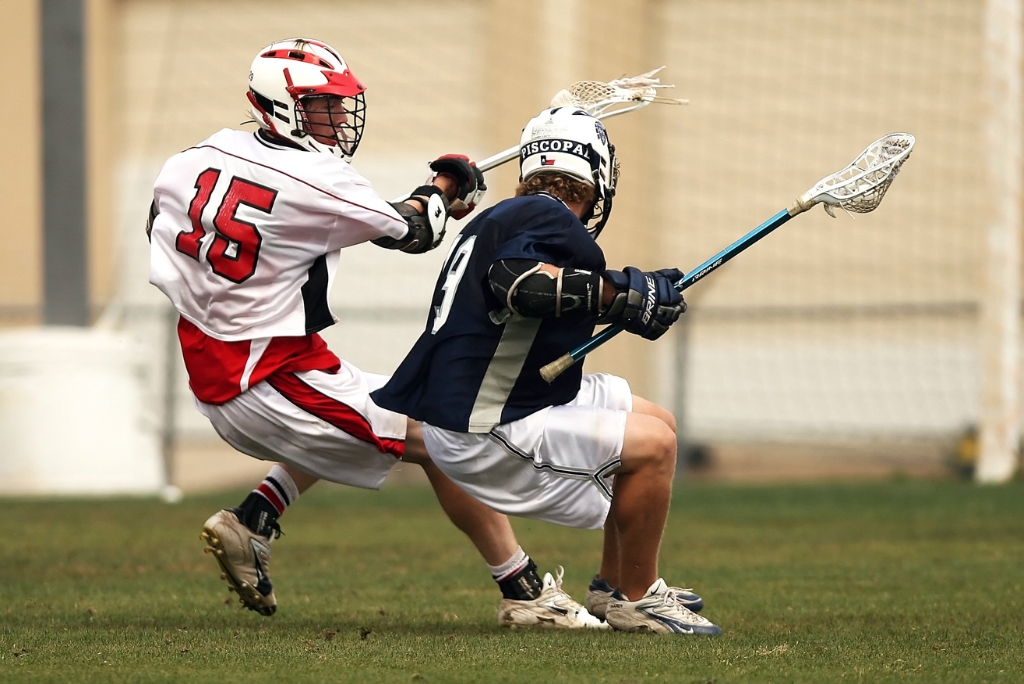
The NCAA Division I Lacrosse Recruiting Calendar
In college lacrosse recruiting, the most consequential evaluation work happens before coaches are permitted to communicate directly with student-athletes. Under current NCAA Division I legislation, direct recruiting contact for women’s lacrosse opens September 1 at 12:00 p.m. Eastern time at the beginning of eleventh grade. For men’s lacrosse, direct outreach begins at 7:00 a.m. Eastern on the Wednesday immediately following Labor Day at the start of eleventh grade.
The NCAA and USA Lacrosse implemented this structure to curb early commitments from younger athletes. Because programs finalize their evaluation boards well before official contact begins, the summers following ninth grade and tenth grade carry disproportionate weight. College coaches depend on summer club tournaments, prospect camps, and verified game film to establish their target boards.
Families can manage this timeline effectively by focusing on three clear priorities:
- Building a balanced target list of academically and athletically competitive colleges
- Producing coach-readable highlight reels and verified full-game footage
- Scheduling high-yield showcases with verified collegiate coach attendance
Executing these steps early confirms a player is properly evaluated before the recruiting window opens. Reach out through our admissions contact form to design a rules-compliant athletic recruiting plan tailored to your graduation year.

College Lacrosse Pathways: Governing Bodies, Divisions, and Rules
College lacrosse recruiting spans multiple governing bodies and competitive levels, including NCAA Divisions I, II, and III, NAIA programs, and club teams in the MCLA. Each structure maintains distinct recruiting calendars, academic standards, and communication rules.
Recruiting regulations are both division- and gender-specific. Men’s and women’s lacrosse follow different calendars and definitions. For instance, the women’s calendar includes designated evaluation periods and recruiting shutdown windows that do not exist on the men’s schedule. Families must identify the correct governing framework before evaluating coach outreach strategy:
- Contact period: Coaches can speak directly with athletes in person and evaluate off-campus competitions.
- Evaluation period: Coaches may observe live gameplay, but off-campus in-person conversations are prohibited.
- Quiet period: In-person interactions are restricted strictly to the college campus.
- Dead period and shutdown: All in-person contact and live evaluations are barred.
Generic camp invitations do not indicate active interest, while silence during a dead period simply reflects compliance with NCAA bylaws.
Division I, II, and III Lacrosse Recruiting Timelines and Financial Realities
NCAA Division I bylaws prohibit direct contact until September 1 at 12:00 p.m. Eastern for women and 7:00 a.m. Eastern on the Wednesday after Labor Day for men at the start of eleventh grade. Division II and Division III programs operate on earlier timelines that allow families to build meaningful recruiting momentum before Division I communication opens.
Under Division II governance rules, college coaches may initiate direct contact and telephone calls on June 15 immediately preceding an athlete’s eleventh grade year. Division III bylaws permit off-campus contact as soon as a student-athlete completes tenth grade.
These differing regulations shape distinct recruiting environments across each division:
Division I:
Communication remains indirect through club or high school coaches until the official fall junior contact date.
Division II:
Two-way dialogue begins the summer before eleventh grade, enabling coaching staffs to evaluate recruits and extend offers earlier.
Division III:
Staffs can initiate conversations after tenth grade, allowing athletes to explore academic fit and team culture well in advance.
Financial structures also vary by division. Division III institutions do not award athletic scholarships, making academic merit and need-based aid central to funding, while Division II operates on an equivalency model where partial athletic scholarships are common.
A balanced college lacrosse recruiting strategy targets programs across all three divisions. Schedule an initial consultation to determine where your outreach is most likely to convert into campus visits and verified roster spots.

Division I Men's and Women's Lacrosse Recruiting Calendars
College lacrosse recruiting requires recognizing that men’s and women’s programs operate under separate regulatory schedules. The NCAA sets specific windows governing when coaches can evaluate players, host campus visits, or communicate directly with prospective student-athletes.
Men’s Division I (2026-27 NCAA Recruiting Calendar)
The NCAA 2026-27 Division I Men’s Lacrosse Recruiting Calendar (updated July 30, 2026) balances contact, quiet, and dead periods. Summer showcases hold the highest evaluation value during June and July contact windows. Families must account for mandatory pauses, including the July 1 through July 10 dead period and the extended August dead period when all recruiting contact ceases. Certain fall windows also allow contact with no lacrosse evaluations permitted. During dead periods, communication silence from coaching staffs reflects compliance rather than disinterest, making them ideal times to schedule informal campus visits and organize academic transcripts.
Women’s Division I (2026-27 NCAA Recruiting Calendar)
Under the NCAA 2026-27 Division I Women’s Lacrosse Recruiting Calendar (updated July 30, 2026), the schedule rotates through evaluation periods, contact windows, dead periods, and recruiting shutdowns. Peak evaluation windows center around summer club tournaments and November national showcases. Once open communication begins in eleventh grade, families can arrange official and unofficial visits during active contact windows. Recruiting shutdowns and dead periods prohibit both on-campus visits and off-campus coach interaction.
Because the NCAA updates these governing frameworks annually, families must confirm the exact calendar for their student’s graduation cohort. To build a customized athletic and academic roadmap from ninth grade through twelfth grade, request a consultation with our team.

Evaluating Athletic Fit, Roster Caps, and Scholarship Realities
College coaches evaluate prospective student-athletes using four primary criteria rather than commercial recruit rankings:
- Verified club tournament and showcase performance against elite competition
- Specific positional needs within the target recruiting class
- Direct character references from trusted club and high school coaches
- Coach-readable game film that demonstrates decision-making speed and technical skill
While national rankings provide visibility, they do not equal roster spots. Division I programs operate under strict roster limits effective July 1, 2025 per NCAA legislative documentation: 48 players for men’s lacrosse and 38 players for women’s lacrosse. For opt-in athletic departments, these roster limits replace traditional sport-specific scholarship caps, allowing full-roster scholarship flexibility.
This structure reduces developmental roster spots at top programs. Because head coaches cannot carry surplus players, academic admissibility is paramount: a player who cannot clear admissions takes a valuable roster spot. Lacrosse has historically operated as an equivalency sport with partial athletic aid, so families must treat scholarship support as institution-specific and evaluate it alongside need-based financial aid.
For broader recruiting fundamentals, review our guide to college sports recruiting tips. Spark Admissions helps families construct balanced, academically aligned college lists and disciplined coach outreach plans.
Essential Game Film Standards for College Lacrosse Recruits
College coaches evaluate hundreds of reels each week, using initial video reviews as a quick triage. Your video must establish your athletic identity and competitive level within the first thirty seconds. An effective highlight reel runs three to five minutes, beginning with a clear title slide listing your name, graduation year, position, jersey number, high school, club team, cumulative GPA, and contact information. Front-load your highest-impact plays in the first segment.
Technical execution matters as much as play selection. Record from an elevated, wide angle that captures full-field spacing and off-ball positioning. Include two to three seconds of lead-in before each play and track the sequence through the tactical result, avoiding slow motion, dramatic music or distracting graphic overlays.
Position-specific footage must focus on functional mechanics. Attackers and midfielders should demonstrate decision-making and two-way play, while defenders and long stick midfielders must show footwork, approach angles, and ground balls. Faceoff specialists need unedited sequences displaying real-time technical adjustments, and goalies should emphasize positioning and clearing accuracy while keeping full-game footage ready to share.
Spark Admissions helps families identify the game film that best supports their target college list. Contact our admissions team to review your student’s college lacrosse recruiting materials.
Integrated Admissions and Recruiting Strategy for High-Academic Lacrosse
For selective institutions across the Ivy League, NESCAC, and Patriot League, college lacrosse recruiting cannot be separated from academic admissions. Head coaches at top programs can only support recruits who meet strict admissions committee thresholds. In practice, a student-athlete’s transcript and academic profile determine which rosters remain realistic options.
Families in competitive lacrosse corridors often encounter a difficult double standard: players must compete at the premier club level while maintaining exceptional transcript rigor. Spark Admissions helps balance these parallel demands by aligning course selection, standardized testing, and application narrative with recruiting calendars.
Partnering with an Ivy League admissions consultant confirms an athletic resume is reinforced by an equally strong academic foundation. Understanding the college application process as an athlete requires the same structured planning we bring to college rowing recruiting and other varsity sports. We regularly advise student-athletes in prominent lacrosse communities, including Darien, Westport, Chappaqua, Bronxville, Needham, Belmont, and Andover.

Our framework synchronizes academic planning with athletic milestones across three key areas:
- Course selection planning tailored to target school academic bands
- Coordinated timing for coach updates, transcript pre-reads, and applications
- Strategic essay development that communicates character, leadership, and intellectual curiosity
To learn how we support student-athletes across all athletic divisions, explore our athletic recruiting college consulting services. Submit an inquiry to schedule an initial consultation with our admissions team.

Frequently Asked Questions About College Lacrosse Recruiting
When can Division I lacrosse coaches contact prospective student-athletes?
NCAA Division I rules permit women’s lacrosse coaches to initiate direct communication beginning September 1 at 12:00 p.m. Eastern time of a student-athlete’s eleventh grade year. For men’s lacrosse, direct contact opens at 7:00 a.m. Eastern time on the Wednesday immediately following Labor Day at the start of eleventh grade. Prior to these dates, coaches cannot call, text, or email recruits directly. Families must also track annual NCAA recruiting calendars, as scheduled dead periods and recruiting shutdowns temporarily freeze all coach interactions even after the junior-year window opens.
Should I email college coaches before eleventh grade?
Student-athletes should begin emailing college coaches during ninth grade and tenth grade, even though NCAA rules prevent coaches from replying directly. Early outreach introduces your academic credentials, tournament schedule, and highlight film to coaching staffs as they build their initial prospective boards. Keep these emails concise, place your graduation year and cumulative GPA in the subject line, and provide accessible links to your video footage. For additional outreach strategies, review our recruiting fundamentals guide.
What is the college lacrosse recruiting timeline by grade level?
In ninth grade, student-athletes should focus on academic rigor, skill development, and establishing a core athletic profile. Tenth grade centers on attending high-yield prospect camps, assembling coach-readable highlight reels, and researching target colleges across athletic divisions. The summer between tenth grade and eleventh grade carries the heaviest evaluation weight for Division I programs, leading directly into fall contact dates, official visits, and verbal offers. Twelfth grade is dedicated to clearing pre-reads, submitting early applications, and finalizing collegiate commitments.
What should be included in a lacrosse recruiting video?
A college lacrosse highlight reel should last three to five minutes, beginning with a clean title slide detailing your name, graduation year, position, jersey number, GPA, and contact information. Place your top eight-to-ten plays in the first thirty seconds to capture coach attention immediately. Record from an elevated sideline position that shows full-field spacing, team shape, and off-ball movement. Avoid dramatic background music, excessive graphic effects, and isolated clips that cut off before the tactical result, and keep verified full-game links ready to share upon request.
Is Division III lacrosse a step down academically or competitively?
Division III lacrosse includes many of the nation’s most selective academic institutions and features high-level competitive play. Top conferences like the NESCAC and Centennial League field nationally-ranked rosters while requiring top-tier academic standards for admission. While Division III programs do not offer athletic scholarships, institutions award merit and need-based financial aid packages to qualifying applicants. Because admissions committees evaluate recruits through standard institutional criteria, athletic support must be paired with an equally rigorous academic profile.
How have new NCAA roster limits affected college lacrosse recruiting?
Under NCAA roster limits implemented following the House settlement, Division I men’s lacrosse rosters are capped at 48 student-athletes, and women’s lacrosse rosters are capped at 38. These firm limits reduce developmental roster spots and walk-on opportunities, requiring head coaches to prioritize recruits who meet academic standards and positional needs immediately. Programs that opt into revenue-sharing models can now fund full-roster scholarships rather than legacy partial awards. Spark Admissions helps families build the academic and athletic profile that earns a genuine roster spot.
Start Your College Lacrosse Recruiting Strategy Today
College lacrosse recruiting rewards families who start early, build a balanced college list, and coordinate athletic outreach with academic positioning. Connect with Spark Admissions to establish a clear path from first outreach to final acceptance.