
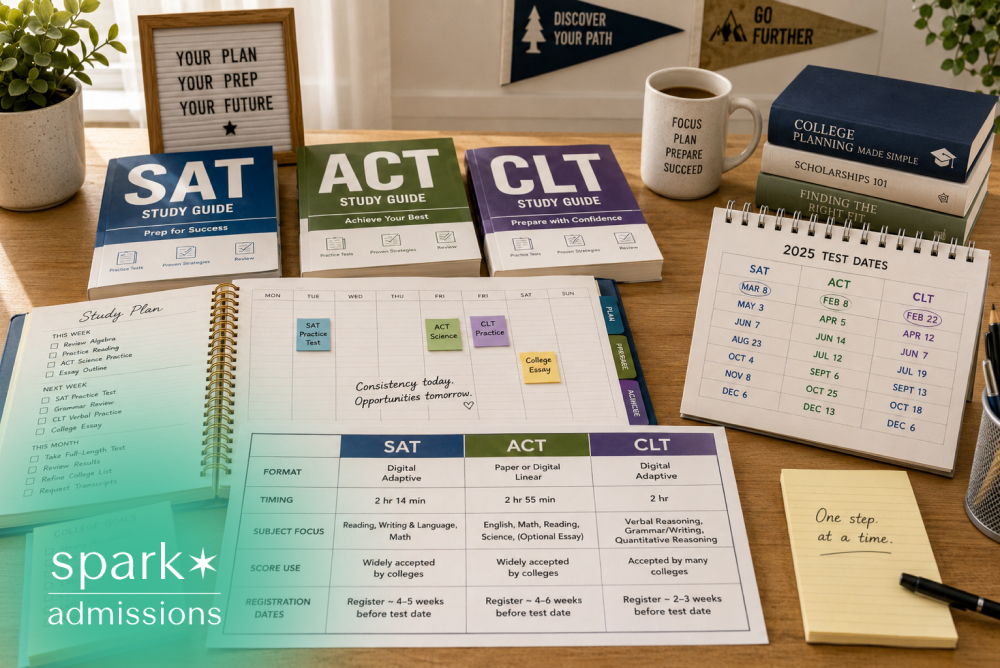
For families navigating non-traditional education, the question of whether homeschool students need the SAT or ACT for college admissions has a nuanced answer: sometimes yes, sometimes no. While test-optional headlines dominate mainstream news, homeschool applicants face unique policy exceptions and competitive merit scholarship realities that make testing far more complicated than it looks.
To protect your student’s college prospects, treat standardized testing as a school-by-school policy requirement rather than a broad national trend as many competitive colleges enforce strict, homeschool-specific rules. Start by assuming nothing until you have checked each school’s official page.
This article walks you through whether to test, which exam to choose between the SAT, ACT, and CLT, and how to apply successfully without scores if that is the right path for your student.
The Test-Optional Loophole Homeschoolers Need to Know
A college can advertise itself as test-optional and still require standardized test scores from homeschool applicants. Admissions offices use these exams as an objective yardstick to validate non-traditional transcripts where grading scales and course curricula vary. Without a public school profile to reference, colleges rely on these scores to contextualize your academic preparation.
To determine your testing strategy, use this three-part decision tree:
- Check Policies: If even one target school mandates the SAT, ACT, or CLT for homeschoolers, you must test.
- Assess Selectivity: For highly selective universities, competitive STEM majors, or honors programs, strong scores provide critical academic credibility.
- Evaluate Scholarships: Many merit scholarships and state-funded programs require test scores for eligibility, even if admissions is test-optional.
Never rely on a university’s general homepage. Instead, search their site specifically for homeschool admissions requirements. To map out your initial list, check our complete list of test-optional colleges updated for 2025, but always cross-reference those listings with each school’s official homeschool policy page.

SAT, ACT, or CLT: How to Choose and Plan Your Homeschool Testing Strategy
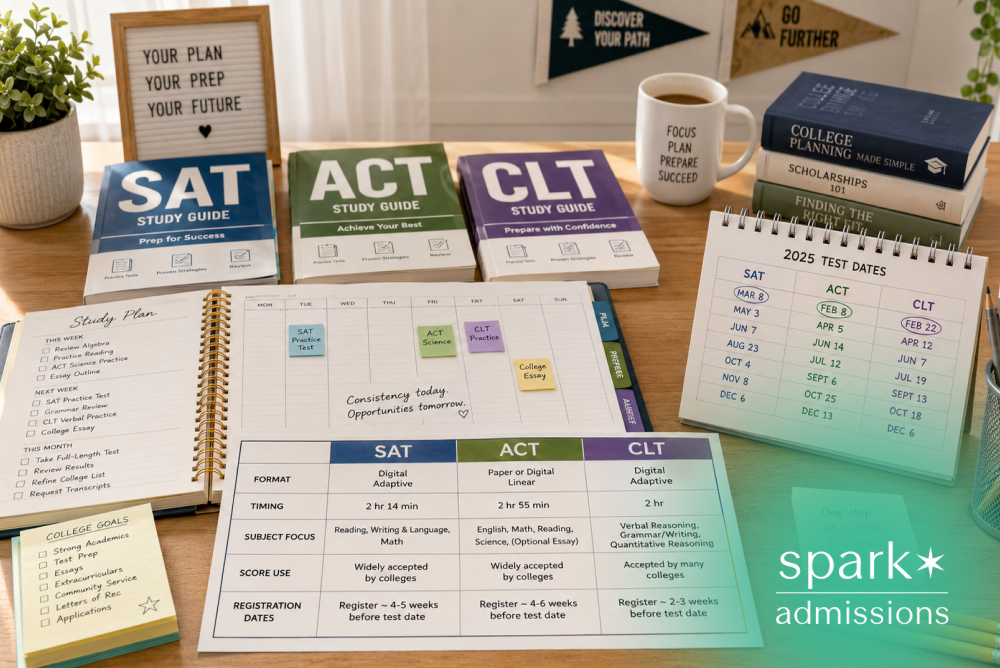
To avoid a chaotic senior-year scramble, all homeschooled juniors need a single, cohesive testing plan. The first step is choosing the exam that best matches your target schools:
- SAT: Widely accepted; serves as a traditional benchmark for admissions officers.
- ACT: Universally accepted; often favored by students who prefer quicker pacing and a dedicated science section.
- CLT: Popular among homeschoolers; accepted at hundreds of liberal arts colleges, but verifies regional scholarship eligibility and is less broadly accepted than the more popular SAT and ACT.
Choose the test that aligns with your strengths, not what your homeschool co-op is doing. If you are deciding between the two mainstream tests, our SAT vs. ACT guide breaks down format differences, scoring, and which fits each type of student.
Because homeschool parents must manage registration logistics, plan to register months in advance to secure seats at local physical test centers. Keep your score reports organized alongside your home-designed transcript. Spark Admissions designs your overall admissions and transcript strategy, so you can focus on preparation, knowing your plan is solid.
How Colleges Evaluate Academic Rigor Without Test Scores
If you choose to pursue a test-optional application strategy, what convinces admissions officers that your student is academically ready? Without standardized test scores, admissions officers look beyond traditional metrics to evaluate your preparation. They require clear, objective proof of academic rigor to validate a non-traditional curriculum.
To build a highly competitive profile, prioritize these validation signals:
- Dual Enrollment: Completing courses at a regionally accredited college proves your student can handle college-level work.
- AP Exams: Standardized scores demonstrate deep subject mastery. This external proof helps even if your homeschool courses were not officially AP-designated. For more details on whether AP scores matter for college admissions, read our full breakdown.
- CLEP and Portfolios: Credit-by-exam tests offer third-party proof of knowledge, while STEM competitions or art portfolios validate specialized talent.
Make sure your transcript includes clear course titles, grading scales, reading lists, detailed course descriptions, and a teacher-of-record note. The best strategy aligns with each college’s policy and your scholarship priorities.

How to Build Your Homeschool SAT or ACT Testing Strategy
The right testing path depends entirely on your college list and goals, not social media trends. Unfortunately, assuming test-optional policies apply equally to homeschoolers is a high-stakes mistake. Many selective universities still require standardized test scores to validate non-traditional transcripts.
Use this five-step checklist to finalize your approach:
- Categorize your list: Group your target colleges into likely, target, and reach options.
- Check homeschool policies: Review each school’s official homeschool admissions page for specific testing rules.
- Audit merit aid: Identify scholarships or honors programs that still require test scores.
- Choose your validation: Based on the schools on your list, select the SAT, ACT, or CLT, or commit to test-optional admissions validated by AP exams or dual enrollment.
- Lock in dates: Secure testing dates and map out your transcript documentation plan.
Frequently Asked Questions About Homeschool College Admissions
If a college is test-optional, can homeschool applicants skip the SAT or ACT?
No, homeschool applicants cannot always skip these exams. Many test-optional colleges maintain homeschool exceptions that require standardized test scores from non-traditional applicants to validate their transcripts. Check each college’s specific homeschooled applicants page, since some only waive this rule if the student has substantial accredited coursework.
Do Ivy League or highly selective colleges expect homeschoolers to submit scores?
Yes, highly selective colleges generally expect or strongly prefer homeschoolers to submit test scores. Strong scores reduce academic uncertainty and validate home-designed transcripts. Understanding what counts as a good SAT score for Ivy League admissions can help you decide whether submitting your scores will strategically boost your chances.
What is the CLT, and is it accepted for homeschool students?
The Classic Learning Test (CLT) is an alternative standardized exam focusing on liberal arts and historical texts. While popular among homeschoolers, its acceptance is highly college-specific and primarily limited to private or faith-based institutions. If you are applying to a mixed list of schools, you will likely still need the SAT or ACT.
Can dual enrollment, AP, or CLEP replace SAT/ACT for homeschool admissions?
Dual enrollment and AP courses offer excellent third-party validation, but they rarely serve as a direct substitute if a college specifically requires the SAT or ACT for homeschoolers. Dual enrollment at an accredited college provides the strongest academic proof.
Can homeschool students still qualify for merit scholarships at test-optional colleges?
Yes, but many top-tier merit programs and state scholarships still require test scores for eligibility. Even at test-optional schools, financial aid departments often use SAT or ACT scores to determine scholarship tiers. For more context, read about the pros and cons of standardized testing for college admissions.
Where can I find a trustworthy starting point for test-optional research?
Our curated complete list of test-optional colleges updated for 2025 is a solid starting point. Because college policies change frequently, always verify the latest requirements directly on each university’s official homeschool admissions page before applying.
This can be a potentially overwhelming process to navigate, and Spark Admissions can help. If you would like to learn more or seek help evaluating your homeschooled student’s testing options book a free consultation.