- Blog
- > College Admissions
9 Best Colleges for Students with Learning Disabilities
- Dr. Rachel Rubin
- | January 23, 2026

Students with learning disabilities are enrolling in college at higher rates than ever before, and colleges are increasingly recognizing the importance of diverse learning styles across the academic environment. For everything from language-based learning disabilities and executive functioning challenges to autism spectrum disorder and developmental disabilities, today’s higher education landscape includes a growing number of institutions committed to providing individualized support, academic success pathways, and inclusive student life.
Still, identifying the right college can feel overwhelming. Many students with learning disabilities come from secondary school environments with structured academic support, learning specialists, and close faculty guidance.
Parents and students alike often worry about whether that level of support will exist in college. They want to know how to identify colleges with programs that genuinely uplift students with learning differences rather than simply meeting minimum legal requirements.
Our team at Spark Admissions can help you explore how to choose colleges that have ample resources for individuals with learning disabilities, outline the academic and personal support systems that matter most, and highlight institutions known for comprehensive programs, individualized assistance, and strong outcomes for students with learning differences.
Discover our specialized expertise by visiting our page about college consultants for students who learn differently.
How Colleges Support Students with Learning Disabilities
Under the Disabilities Act, colleges may not discriminate against students with disabilities, but support services still vary dramatically by institution. Unlike high schools, colleges are not required to proactively identify or provide accommodations unless students self-disclose and request them. This shift makes self-advocacy and executive functioning skills critical for undergraduate success.
As such, the strongest colleges for students with learning disabilities go beyond baseline compliance and invest in structured programs, learning resources, and comprehensive transition offerings. These schools often employ disability and learning specialists and strategy instructors who provide one-on-one support, executive functioning coaching, and guidance focused on time management, study skills, and academic performance.
Key Factors When Choosing Colleges for Students With Learning Disabilities
Finding the right fit requires looking beyond rankings and focusing on how well a college supports students with learning disabilities in practice.
Academic support should include more than accommodations alone. The most effective institutions provide ongoing academic coaching, peer tutoring, and structured academic skills programs designed to support students’ efforts through real coursework challenges. Executive functioning skills, including organization, planning, and sustained attention, are often addressed through coaching and regular meetings with a strategy instructor or learning specialist.
Campus resources also matter. Colleges with centralized learning resource programs, tutoring and support centers, and access to psychological services tend to offer more consistent support. Smaller class sizes and accessible faculty can improve academic success, particularly for students with language-based learning disabilities or executive functioning challenges.
Finally, student life and independent living supports are often overlooked. Colleges that help students develop life skills, social skills, and self-advocacy strategies tend to foster stronger long-term college success, especially for first-year students transitioning from highly supported high school environments.
Will Colleges Know If a Student Uses Accommodations?
A common concern among families is whether colleges will know if a student received accommodations in high school. The answer is no. Colleges do not see accommodation history, IEPs, or 504 plans during the admissions process unless a student chooses to disclose. It is illegal for admissions offices to require or request disability status, and receiving accommodations has no impact on admission decisions.
Disclosure typically happens only after enrollment, through the disability services office, when students request support services. This separation allows students with learning disabilities to apply to colleges on an equal footing while still accessing individualized support once on campus.
Best Colleges for Students With Learning Disabilities
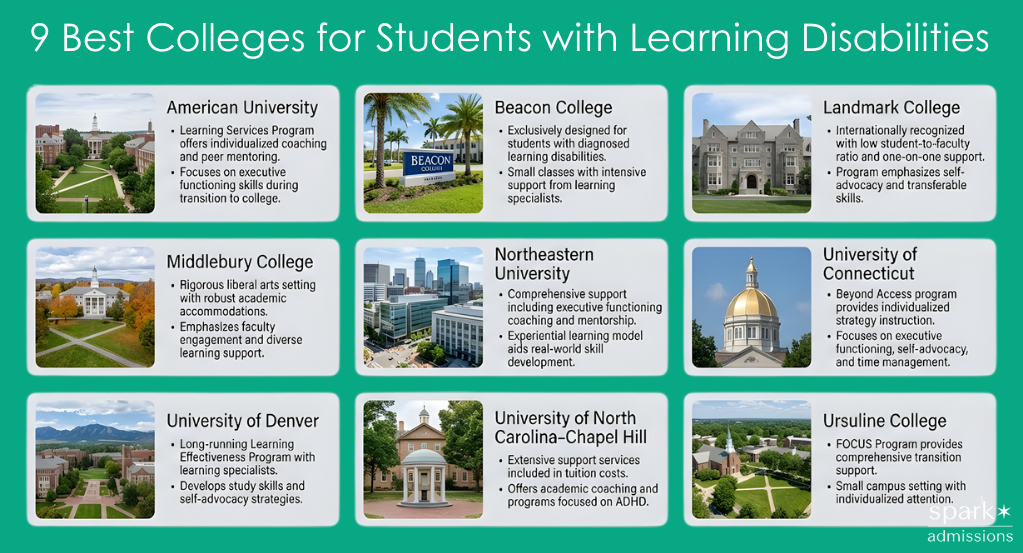
The colleges below are widely recognized for providing comprehensive support programs, structured learning environments, and strong outcomes for students with learning disabilities, autism spectrum disorder, and other learning differences.
American University
American University offers a well-established academic support structure through its Learning Services Program. Designed primarily for first-year students, the program provides individualized academic coaching, priority registration, peer mentoring, and access to learning specialists who focus on executive functioning skills and academic abilities. Program students receive consistent guidance that supports both academic and personal goals during the transition to college life.
Beacon College
Beacon College is one of the only accredited colleges in the country designed specifically for students with diagnosed learning disabilities. The academic environment emphasizes small classes, individualized support, and comprehensive programs that integrate academic skills, social skills, and independent living development.
Beacon employs learning specialists, disability specialists, and executive functioning coaches to ensure students receive intensive support throughout their college experience.
Landmark College
Landmark College is internationally recognized for serving students with learning disabilities, autism spectrum disorder, and executive functioning challenges. With a low student-to-faculty ratio, Landmark provides one-on-one support through learning specialists and strategy instructors. Its learning effectiveness program focuses on academic success, self-advocacy, and transferable skills that support students beyond college.
Middlebury College
Middlebury College demonstrates how highly selective institutions can support students with learning disabilities within a rigorous liberal arts setting. Through its learning resource program and disability specialists, Middlebury offers academic accommodations, peer tutoring, and assistive technology. The college emphasizes diverse learning and faculty engagement, making it a strong option for students seeking academic challenges alongside robust support services.
Northeastern University
Northeastern University’s Learning Disabilities Program is frequently cited as a model for comprehensive support at a large research institution. The program provides executive functioning coaching, academic guidance, mentorship advantage program elements, and structured check-ins with trained advisors. Students benefit from both campus resources and Northeastern’s experiential learning model, which supports real-world skill development.
University of Connecticut
The University of Connecticut’s Beyond Access program offers a structured academic skills program within a large public university. Students receive individualized support through strategy instructors, academic coaching, and peer mentoring. The program focuses on executive functioning skills, self-advocacy, and time management, helping students achieve academic success in a demanding learning environment.
University of Denver
The University of Denver’s Learning Effectiveness Program is one of the longest-running comprehensive support programs in the country. Students work closely with learning specialists and strategy instructors to develop study skills, academic performance strategies, and the ability to self-advocate effectively. The program’s individualized support model is particularly helpful for students with executive functioning challenges.
University of North Carolina–Chapel Hill
UNC–Chapel Hill stands out among public universities for its extensive support services for students with learning disabilities. Through its learning center, students access academic coaching, peer tutoring, psychological services, and structured programs focused on ADHD and other learning differences. Unlike many support programs, these services are included in the cost of tuition rather than being offered as fee-based programs.
Ursuline College
Ursuline College’s FOCUS Program provides a comprehensive transition program for students with learning disabilities. The program emphasizes self-advocacy strategies, academic coaching, priority registration, and regular progress monitoring. Ursuline’s small campus and individualized support make it particularly appealing for students seeking a close-knit academic community.
Landmark-Style and Emerging Programs
In addition to the colleges above, schools such as Dean College, Mitchell College, Hofstra University, West Virginia Wesleyan College, and Southern Illinois University offer structured learning disabilities programs, mentorship advantage programs, and academic skills support. Many of these colleges feature learning specialists, peer mentoring, and intensive support tailored to program students.
Scholarships and Financial Support for Students with Learning Disabilities
Scholarships for students with learning disabilities exist, though they are often underutilized. National organizations, private foundations, and some colleges offer awards for students with diagnosed learning disabilities, autism spectrum disorder, or intellectual and developmental disabilities.
Additionally, colleges with comprehensive support programs may offer institutional aid or reduced program fees for qualifying students.
FAQ: Colleges for Students with Learning Disabilities
If you have additional questions, contact us to speak with a member of our team about your specific needs.
Do students with learning disabilities have to attend specialized colleges?
No. Many students with learning disabilities thrive at traditional colleges with strong academic support and disability services. The right choice depends on the level of individualized support a student needs.
Are support programs fee-based?
Some colleges charge additional fees for comprehensive programs, while others include support services in tuition. Families should compare costs alongside outcomes and the level of support.
What accommodations are common in college?
Extended time, distraction-reduced testing environments, note-taking assistance, assistive technology, and priority registration are common reasonable accommodations.
How important is self-advocacy in college?
Self-advocacy is essential. Colleges expect students to request accommodations, communicate with faculty, and manage support services independently.
Can students with learning disabilities succeed in rigorous academic programs?
Yes. With appropriate support, many students with learning disabilities excel both academically and professionally.
Get Admissions Help for Choosing Colleges for Students with Learning Disabilities
The best colleges for students with learning disabilities are those that combine academic rigor with individualized support, executive functioning coaching, and a campus culture that values diverse learning. With the right environment, students with learning differences can thrive academically, socially, and personally throughout their undergraduate experience.
At Spark Admissions, we view the college preparation period as a time for skill-set development, particularly for students with learning differences such as autism spectrum disorder, dyscalculia, dysgraphia, and language-based learning disabilities. In addition to offering application strategy, we help students navigate academic demands, access appropriate accommodations, and build their executive functioning and self-advocacy skills. Contact Spark Admissions to get started.
About The Author