

The connection between college belonging and graduation rates is gaining increased attention across higher education. As institutions look beyond GPA and test scores to understand long-term outcomes, research continues to highlight the role of campus connection in student persistence.
A growing body of evidence suggests that when college students feel connected to their campus community, they are significantly more likely to remain enrolled and graduate on time. This relationship between belonging and graduation outcomes has meaningful implications for student success, academic persistence, and long-term well-being.
New research from Wake Forest University adds to a growing national perspective showing that belonging is not a vague emotional concept but a measurable factor linked to retention rates and graduation. For students applying to four-year colleges, especially first-generation students or those navigating unfamiliar academic environments, finding a school that feels like a cultural and community fit can be as important as evaluating rankings or prestige.
What Researchers Mean by “Sense of Belonging”
In higher education research, belonging refers to a student’s perception that they are valued, supported, and included within their campus community. A strong sense of belonging develops when students feel accepted by peers, faculty, and staff, and when they see themselves reflected in the academic and social life of the institution. Campus belonging is shaped by everyday interactions, access to resources, and the overall student experience.
Researchers often measure students’ sense of belonging through surveys that ask how connected students feel to their campus, whether they believe they matter to their institution, and whether they feel comfortable participating in academic engagement and community life. These data points allow researchers to examine patterns between belonging, retention, graduation outcomes, and academic success.
Wake Forest University’s Findings on Belonging
Wake Forest University released research examining how student belonging relates to graduation outcomes at four-year institutions. The study followed college students from their first year through graduation and used statistical modeling to analyze the relationships among belonging, academic performance, and persistence.
Students completed surveys measuring belonging using a five-point scale, capturing students’ sense of connection to peers, faculty, and the campus environment.
The findings send a clear message. Students who reported a higher level of belonging were significantly more likely to graduate in four years.
In fact, the research showed that a one-point increase on the belonging scale was associated with a meaningful increase in graduation rates, even when controlling for academic preparation and socioeconomic background. While no single factor determines whether a student graduates, this research reinforces the idea that belonging, connection, and community play a meaningful role in long-term persistence, especially for students facing structural and psychological challenges.
Why Belonging Matters for Student Success
Student success is shaped by far more than grades alone. While academic performance and success remain critical, students’ sense of belonging influences motivation, engagement, and persistence.
College students who feel connected to their campus are generally more likely to attend class consistently, seek support from faculty, and participate in academic and extracurricular activities. Belonging can also influence motivation and resilience, particularly during the first and second years of college when transitions can feel most challenging.
Research also links belonging to mental health and well-being. Students who feel isolated or disconnected often experience higher stress, anxiety, and burnout, which can negatively affect academic engagement and graduation outcomes.
Belonging does not eliminate challenges, but it may influence how students navigate them and maintain momentum through difficult periods.
Graduation and Retention Outcomes
Graduation rates and retention are key metrics for institutions and policymakers. Research shows that college belonging is strongly associated with both. Students who feel a strong sense of belonging are more likely to return for their second year, persist through academic challenges, and ultimately graduate within four or six years.
Wake Forest University’s findings align with broader research across higher education, showing that belonging predicts graduation outcomes even more strongly than some traditional academic indicators. This is particularly true at large public universities and institutions where students may struggle to find community within a vast campus environment.
First-Generation Students and Belonging
First-generation college students often navigate additional layers of complexity when entering higher education. These students may encounter unfamiliar institutional systems, financial considerations, or limited access to informal advising networks that students with college-educated parents or guardians are less likely to experience. These structural and psychological challenges can undermine students’ sense of belonging early in their college experience.
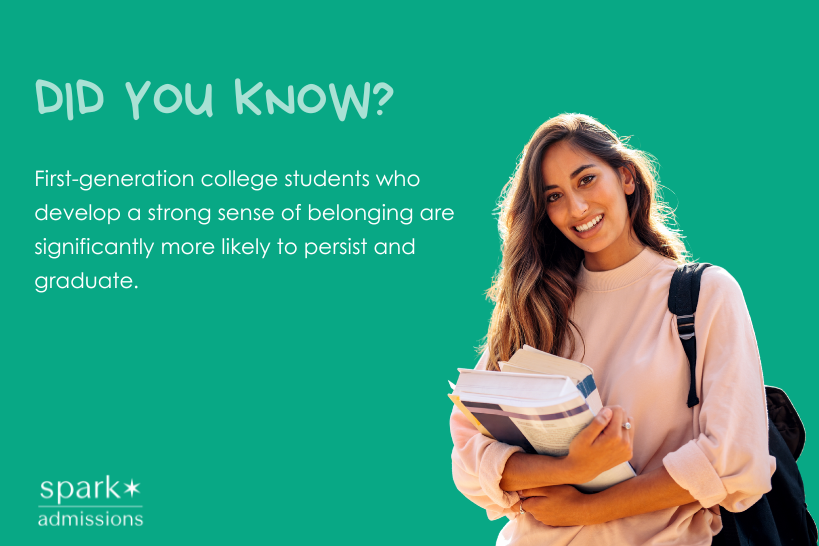
Research shows that first-generation students who develop a strong sense of belonging are more likely to persist and graduate. Supportive campus communities, accessible faculty, and targeted resources can help remove everyday barriers and strengthen belonging.
Additional financial aid, mentoring programs, and proactive advising are examples of such interventions that help ease that transition. It is important, however, to avoid viewing any group of students as uniform. Experiences vary widely, and belonging is shaped by both institutional culture and individual circumstances.
Factors That Influence Campus Belonging
Campus belonging is influenced by multiple factors operating at both the individual and institutional levels. Faculty engagement plays a significant role, as students who feel known and supported by professors report higher belonging. Peer relationships, inclusive campus cultures, and access to support resources also shape the student experience.
University settings that prioritize mental health, equity, and community-building tend to foster stronger belonging. Institutions that invest in student support services, learning communities, and inclusive programming help students feel valued and connected.
These factors are particularly important for students attending four-year colleges far from home or those navigating new cultural environments.
Measuring College Belonging
Measuring and improving college belonging requires intentional research and assessment. Many institutions use surveys to assess students’ sense of belonging at different points in the college experience, particularly during the first year. These surveys allow schools to identify gaps in support and track changes over time.
Wake Forest University’s study used survey data combined with academic records to demonstrate how belonging predicts graduation outcomes. By linking survey responses to retention and graduation data, researchers demonstrated a strong relationship between belonging and student persistence.
How Institutions Foster Belonging
Colleges and universities across the country use a range of strategies to enhance campus belonging. Learning communities, first-year seminars, and faculty mentoring programs are designed to help students build connections early. Institutions also invest in student organizations, cultural centers, and community spaces that foster inclusion.
Removing structural barriers is another critical strategy. Addressing transportation costs, offering flexible scheduling, and expanding access to advising and mental health resources all contribute to student well-being and belonging.
Such interventions are particularly effective for first-generation students and those facing financial or logistical challenges.
What This Means for Students Choosing a College
For students applying to college, the research offers a clear takeaway. Choosing a school where you feel a sense of belonging can directly impact your ability to graduate on time. Academic reputation and rankings matter, but they should not overshadow the importance of community, culture, and support.
When evaluating colleges, students should consider how well a college aligns with their values, learning style, and support needs. Visiting campus, speaking with current students, and exploring student organizations can provide insight into whether a school fosters belonging.
Finding the right fit increases the likelihood of a positive college experience and successful graduation. It’s beneficial to use a college admissions consultant to help you learn what to look for when building your college list.
College Fit and Admissions Planning
At Spark Admissions, we emphasize that college fit goes beyond selectivity and prestige. It includes academic environment, campus culture, student support, and opportunities for engagement.
Students who attend institutions where they feel connected and supported are more likely to thrive academically and personally. This is especially true at Top 50 colleges, where academic rigor is high, and support networks play a critical role in student persistence and success. Fit does not guarantee outcomes, but connection and community are part of what makes academic success sustainable.
Our role in the admissions process is to help students think holistically about their options — academically, socially, and personally — so that their final decision reflects both opportunity and alignment.

College Belonging as a Priority in Higher Education
As higher education continues to evolve, belonging is becoming an increasingly central focus for institutions seeking to improve graduation rates and student outcomes. Research suggests that fostering belonging benefits not only students but also colleges aiming to improve retention and graduation metrics.
Spark Admissions helps students identify colleges where they can succeed academically and feel a genuine sense of belonging. We guide students through every phase of the admissions journey, from academic planning and school selection to application strategy for Early Decision, Early Action, and Top 50 colleges. Contact Spark Admissions to choose colleges where your student can thrive, persist, and graduate with purpose.