
- Blog
- > College Admissions
Colleges That Accept Glimpse: Video Introductions in College Admissions
- Dr. Rachel Rubin
- | December 29, 2025
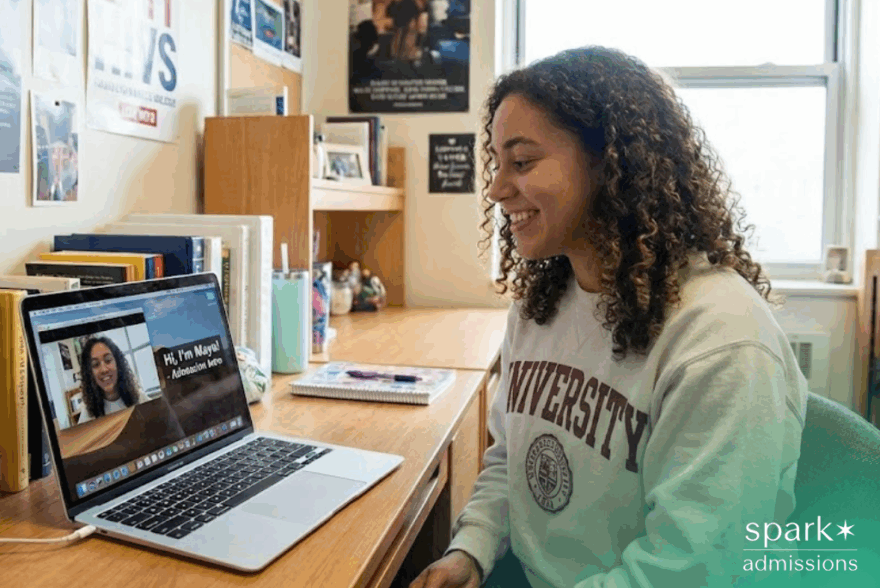
As more colleges experiment with digital components within the college admissions process, short video introductions have emerged as an increasingly common option for applicants. Tools like Glimpse allow students to submit brief, authentic recordings that help admissions officers understand their communication style, personality, and presence in ways that written applications cannot fully capture. Although not all colleges use these formats, a growing number of universities now allow video submissions as part of their application process, giving many applicants a unique opportunity to present something more personal.
This guide offers a curated, continually updated list of colleges that accept Glimpse or similar video introductions, explains why many colleges are adopting these formats, and outlines how applicants can use video submissions to make a lasting impression. Because policies shift from year to year, however, students should always double-check requirements through each school’s application portal or website.
Why Colleges Use Video Introductions
Video submissions have grown more popular because admissions officers want to understand an applicant beyond grades, test scores, and essays. A short video introduction allows students to speak naturally, highlight key interests, and share aspects of their unique story that might not appear elsewhere in the application materials. Admissions committees also see video tools as useful for international applicants who may not have alumni interviews or for students whose written applications do not capture their communication style.
For admissions teams, video content adds authenticity to the admissions process. When students submit a video, it can provide insight into their personality, confidence, and ability to connect. These submissions are also free through many platforms, so they can function as an alternative to traditional interviews. For colleges, especially highly selective universities where most applicants are academically qualified, a short video introduction can help distinguish students in meaningful ways.

Colleges That Accept Glimpse or Similar Video Introductions
Below is a sourced list of colleges that accept Glimpse, self-recorded video introductions, or optional video submissions through the Common Application or school-specific platforms. Policies vary, and some universities allow optional video messages only in specific programs or during certain rounds, such as Early Decision.
Brown University offers an optional video introduction, giving applicants the chance to supplement written materials with a personal touch. Brown has stated that admissions officers consider video submissions as one way to understand the applicant’s personality.
University of Chicago accepts video submissions and encourages creativity, noting that the video can demonstrate interest, enhance a student’s record, and serve as an alternative to alumni interviews. UChicago admissions officers emphasize that the optional video helps the admissions committee observe communication style directly.
Boston University offers an optional video introduction for students applying through the Common Application. The video is not required, but it allows students to present themselves more directly to the admissions committee, which can help strengthen an application.
Washington University in St. Louis accepts video introductions for applicants who want to provide context to their academic interests or personal background. WashU has noted that these submissions allow many applicants to highlight aspects of their lives not visible in written materials.
Vanderbilt University provides an optional video submission opportunity, especially for students who cannot participate in alumni interviews. Vanderbilt’s admissions teams encourage applicants to use the video to discuss academic interests, organizations they participate in, and other elements of their community engagement.
Glimpse-compatible schools across the United States also include a range of institutions that use self-recorded short videos as part of the admissions process. Many colleges that accept Glimpse allow students to upload the video through their application portal or through the Common Application. Because many colleges update their policies annually, applicants should check each school’s requirements after creating their Glimpse account.
Although the list above represents the most consistent universities currently allowing optional video submissions, many colleges continue to experiment with new formats. Students should regularly review admissions pages for updated guidance before submitting videos.
How Glimpse Fits Into the College Admissions Process
Video introductions fit within the standard application process as supplemental materials. They do not replace essays, test scores, transcripts, or interviews when required. Instead, they provide a personal touch that can help admissions officers understand an applicant’s communication style and presence. Admissions officers often view these videos after reading written applications to observe whether the student’s voice and personality in the essays align with what appears on video.
Colleges emphasize that videos should be short, authentic, and focused. Students should speak clearly, avoid scripts, and present confidence without memorization. Admissions officers want to see a real student, not a polished performance. Because many colleges use these videos to evaluate demonstrated interest, submitting one can help applicants signal genuine enthusiasm in that particular school.
Students sometimes submit these videos through their application portal, and some colleges offer prompts to guide what applicants discuss. These specific prompts often ask students to describe a meaningful community, an example of leadership, a major interest, or a story that reveals something essential about their identity. Even without a prompt, colleges are all looking for clarity, sincerity, and a sense that the applicant is comfortable speaking openly about their thoughts and experiences.

How to Create a Strong College Video Introduction
A good video introduction focuses on clarity, message quality, and authenticity. Students should prepare, but not memorize. The goal is to present natural speech, communicate confidently, and articulate a few strong ideas. The video should demonstrate something that written applications cannot express. For example, a student might describe how a particular interest developed, explain a community they support, or share the story behind an extracurricular activity that shaped their identity.
Lighting and audio should be clean, but production does not need to be elaborate. The admissions committee is not evaluating filmmaking ability; they are evaluating the student. Because many colleges do not require videos, the applicant should focus on using this medium to add value rather than repeating information that can already be found in their essays.
Students should test recording quality, speak naturally, and avoid rushing. A calm, clear presentation gives admissions officers the best sense of the student’s communication style. A strong video introduces the student authentically and leaves a lasting impression.
Who Should Consider Submitting a Video?
Submitting a video introduction can benefit many types of applicants. Students who are more expressive verbally than in writing can use videos to present themselves more effectively. International applicants can use videos to provide clarity around language proficiency. Applicants without access to alumni interviews can use videos as an alternative means of introducing themselves to the admissions office.
Students who are strong communicators should especially consider recording a video. Applicants with impassioned interests in community involvement, student organizations, or unique extracurricular experiences can use videos to reinforce a narrative that may not fully emerge from written materials. Students who feel their personality helps illustrate why they are a good fit for a particular school should strongly consider Glimpse or equivalent tools.
Because many colleges accept Glimpse, students can use the platform to present consistent, high-quality submissions for multiple universities. Students should note any deadlines for video submissions and submit in a timely manner, especially when applying Early Decision or Early Action.
Using Glimpse for College Admissions
Video submissions are becoming a more recognized part of the college admissions landscape. Many colleges are adopting Glimpse or similar options because they allow students to connect directly with the admissions committee. While not all colleges accept Glimpse, the list continues to expand, and students who use these optional components can strengthen their applications with a more personal introduction.
Applicants should always consult each university’s application portal for the most up-to-date policies. Still, students who use Glimpse strategically can enhance their application process, deepen the authenticity of their submissions, and create a more holistic impression. Working with a college admissions counselor will help you stay on top of technology and what college admissions officers want to see.
At Spark Admissions, we view the college preparation period as a time for skill-set development. Beyond application strategy, we help students navigate academic demands, build a strong record, and explore opportunities that meaningfully reinforce their long-term goals.
If you would like to discuss how video submissions, Glimpse, or any part of your application strategy fits into your overall college admissions goals, connect with a Spark Admissions counselor today.
About The Author