
- Blog
- > BS/MD Programs
The Impact of AI on Computer Science: What Students Should Know
- Dr. Rachel Rubin
- | March 30, 2026

The rapid growth of artificial intelligence has raised questions among many students considering a computer science major. With powerful AI tools capable of writing code, generating documentation, and assisting with debugging, some families wonder whether AI-generated code could make computer science jobs obsolete. Others question whether it still makes sense to study computer science in the AI era.
The reality is far more nuanced. Rather than eliminating opportunities, the impact of AI on computer science is transforming how computer scientists work and the types of skills they must develop. As artificial intelligence, machine learning, and generative AI become embedded in everything from business operations to autonomous systems, demand continues to grow for professionals who can design, guide, and evaluate these technologies.
For high school students interested in computer science, understanding the future of the field means recognizing that it is evolving. The strongest applicants to Top 50 universities will demonstrate not only strong coding skills but also problem-solving, critical thinking, and the ability to combine technical expertise with human judgment. Increasingly, students are also exploring how computing intersects with broader societal questions, including ethics, public policy, and environmental sustainability.
Why AI Is Transforming Computer Science
Artificial intelligence is not replacing computer science; in many ways, it is expanding its reach across industries. Modern AI systems rely on massive datasets, advanced machine learning techniques, and powerful models that perform tasks such as natural language processing, image recognition, and computer vision.
These innovations require skilled computer scientists to design and maintain the underlying computer systems and software infrastructure that support them. In many cases, AI tools now automate repetitive coding tasks, enabling developers to focus more on system architecture, large-scale design, and solving complex problems.
For example, code generation tools can quickly produce simple scripts, but experienced software engineering professionals are still required to ensure that systems are secure, scalable, and aligned with real-world needs. Even the most advanced AI systems depend on human expertise to guide their development and responsible deployment.
According to the World Economic Forum, artificial intelligence and automation are expected to transform millions of jobs while simultaneously creating new roles. Meanwhile, labor statistics from the U.S. Bureau of Labor Statistics show that careers such as computer and information research scientists, machine learning engineers, and other computing roles are projected to grow significantly in the coming decade.
The takeaway is clear: the AI impact on computer science is less about replacement and more about evolution.

The Future of Computer Science Careers
One of the biggest concerns students have is whether AI could make programming less valuable. In reality, the future of computer science will likely include even more opportunities for skilled professionals.
As organizations adopt AI applications across their operations, they increasingly need experts who understand both software engineering and intelligent systems. Computer scientists design infrastructure, optimize algorithms, and ensure that complex systems function reliably.
New specialties are also emerging across the field. Computer scientists now work in areas such as data science, deep learning, computer vision, and natural language processing. These disciplines require strong mathematical reasoning, programming ability, and domain expertise.
While AI-generated code can accelerate development, it cannot replace human intelligence, especially when addressing ambiguous requirements or designing innovative systems. The most successful computer science professionals will understand how to work alongside AI while applying human judgment, critical thinking, and technical expertise.
Students interested in computing careers should also recognize that many positions now involve human-AI collaboration, where developers use AI tools to accelerate workflows. This approach allows engineers to produce code more efficiently, analyze data more quickly, and experiment with new solutions.
Essential Skills for the AI Era
The rise of artificial intelligence is reshaping the skills required for success in computer science. While coding skills remain important, the most valuable technical skills now extend far beyond simply learning how to write code.
Modern computer scientists must develop a strong understanding of data structures, machine learning, and system design. These core skills allow professionals to build reliable AI applications and integrate intelligent systems into larger platforms.
Equally important are problem-solving and critical thinking abilities. When AI models produce incorrect outputs or biased recommendations, computer science professionals must diagnose why those errors occur and refine the system.
Students should also develop AI literacy—an understanding of how AI tools function and how to use them responsibly. This includes learning how to evaluate outputs, verify accuracy, and guide generative AI tools through thoughtful instructions.
Emerging fields such as prompt engineering demonstrate how the interaction between humans and artificial intelligence can influence outcomes. Crafting effective prompts requires both technical expertise and a strong human awareness of language and context.
Ultimately, the future of computer science belongs to individuals who combine technical expertise with creativity, strategic thinking, and adaptability.
Human Skills That AI Cannot Replace
Despite rapid advances in artificial intelligence, many abilities remain uniquely human. Concerns about automation often overlook the importance of human creativity, empathy, and contextual reasoning in technology development.
Successful computer scientists combine technical mastery with human skills such as communication, collaboration, and ethical reasoning. These qualities are essential when designing systems that affect millions of users.
For example, engineers developing AI applications in healthcare or finance must consider issues such as risk, fairness, and potential unintended consequences. These decisions require human judgment, not just algorithmic output.
Human-AI collaboration also plays a critical role in innovation. Developers who understand how to leverage automation tools can accelerate experimentation and explore new ideas faster than ever before.
Students interested in computer science should therefore focus on building interdisciplinary interests as well. Fields such as philosophy, economics, psychology, and the humanities can deepen understanding of human behavior and help guide responsible technology development.
Ethics and Responsible AI Development
As artificial intelligence becomes more powerful, ethical considerations are becoming central to the technology industry. Issues such as algorithmic bias, transparency, and accountability are now major priorities for organizations developing AI systems.
As a result, many universities have expanded coursework in AI ethics, fairness in algorithms, privacy protections, and responsible data use.
These questions are especially important in areas such as image recognition, natural language processing, and autonomous systems, where algorithms influence real-world decisions.
Addressing these challenges through ethical decision-making requires more than technical expertise. Computer scientists must think carefully about the broader societal impact of the technologies they build.
Students who demonstrate interest in these questions through research projects, interdisciplinary coursework, or public policy initiatives may stand out in the college admissions process, particularly when applying to Top 50 universities.
Environmental Sustainability and AI Infrastructure
Another emerging conversation in artificial intelligence involves the environmental impact of large-scale computing systems. Training advanced AI models requires enormous computing power, often supported by energy-intensive data centers. As AI adoption grows, technology companies and researchers are paying closer attention to energy consumption, water usage, and the environmental footprint of AI infrastructure.
This challenge is creating new opportunities for computer scientists interested in sustainability. Researchers and engineers are working on energy-efficient algorithms, more sustainable data center design, and methods for reducing the environmental cost of large-scale computing.
For students considering computer science, this topic also offers a meaningful way to connect technology with real-world impact. Research projects, interdisciplinary coursework, or internships related to sustainable computing can demonstrate intellectual curiosity about how technology affects society—an interest that may strengthen a student’s academic profile in the college admissions process.
Educational Pathways in AI and Computer Science
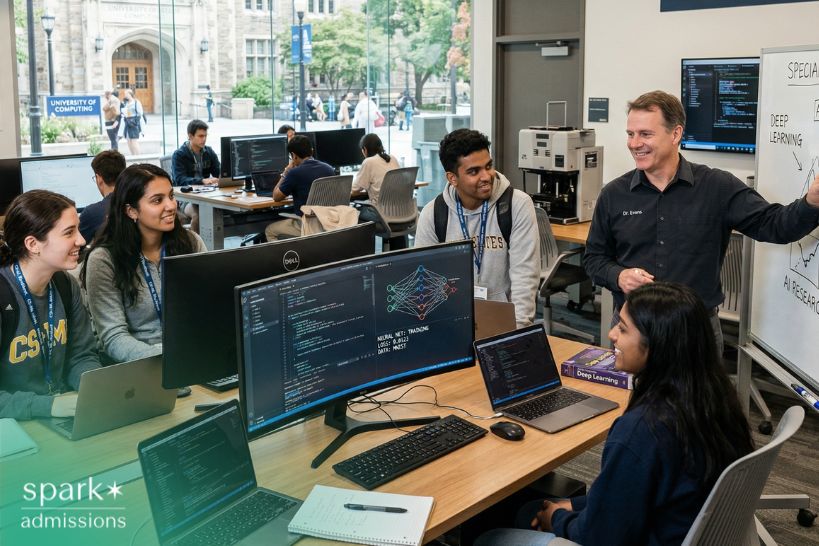
Students interested in the impact of AI on computer science should begin preparing early in high school. Strong preparation typically includes advanced mathematics, programming courses, and hands-on technical projects.
Many universities now offer specialized tracks that combine computer science with machine learning, data science, or artificial intelligence. These programs often emphasize hands-on experience with real datasets and collaborative research.
Students can also explore opportunities outside the classroom. Coding competitions, robotics teams, internships, and independent research projects allow students to build practical skills while demonstrating initiative during the college admissions process.
Some students pursue interdisciplinary pathways that combine computer science with other fields. For example, combining computing with biology can lead to careers in bioinformatics, while pairing computing with economics can support work in financial technology.
The most compelling applicants often demonstrate both technical expertise and intellectual curiosity about how technology shapes society.
Emerging Roles in Artificial Intelligence
The AI impact on computer science is creating entirely new career paths. Many companies now hire machine learning engineers, AI safety researchers, and specialists in intelligent systems.
These professionals design algorithms that power recommendation engines, speech recognition tools, and generative AI platforms. They also analyze how systems behave and improve their performance.
Another rapidly growing area is computer vision, where algorithms interpret visual data for applications ranging from medical imaging to autonomous vehicles.
In addition, computer and information research scientists work on foundational advances in artificial intelligence, developing new algorithms and exploring the theoretical limits of computing.
As emerging technologies continue to reshape industries, demand for experts who can design intelligent systems and guide responsible implementation is expected to grow.
Are Computer Science Degrees Still Worth It?
Given these developments, many students ask whether pursuing a computer science degree is still worthwhile. The answer is overwhelmingly yes.
Rather than diminishing the value of computer science, artificial intelligence is expanding its reach. Students who build strong technical foundations today will help shape the future of computer science and the technologies that define the coming decades.
At Spark Admissions, we guide students in building real-world experience through internships, research, and leadership activities that align with their intellectual interests. Through personalized advising, we help students strengthen their skills, refine their academic goals, and prepare for the demands of top universities.
Contact us to learn more.
About The Author