
- Blog
- > Transfer Admissions
College Transfer Deadlines: Fall & Spring Timelines for Top Universities
- Dr. Rachel Rubin
- | January 26, 2026
Deadlines are among the most misunderstood and time-sensitive parts of the college transfer admissions process. Unlike with first-year admissions, transfer timelines vary widely by institution, term, and academic program, making it easy for transfer applicants to miss critical dates.
Whether you are applying from a community college, transferring from another four-year university, or seeking a better academic fit, understanding transfer application deadlines is essential to keeping your options open. Working with a transfer admissions counselor can help.
We want you to be prepared, so we’re offering some guidance about fall and spring college transfer deadlines, rolling versus fixed admissions, and how to back-plan your application process. We will also review transfer admissions requirements, financial aid considerations, and late-transfer risks so you can move forward with clarity and confidence.
Transfer Deadlines at Top Universities
While deadlines vary by school, many colleges and universities cluster around similar timelines. Highly selective private institutions often set earlier deadlines and require extensive documentation, including a college report completed by a school official at the current institution. Public universities may offer both fall and spring transfer admission, but competitive academic programs often have earlier application deadlines than the general university.
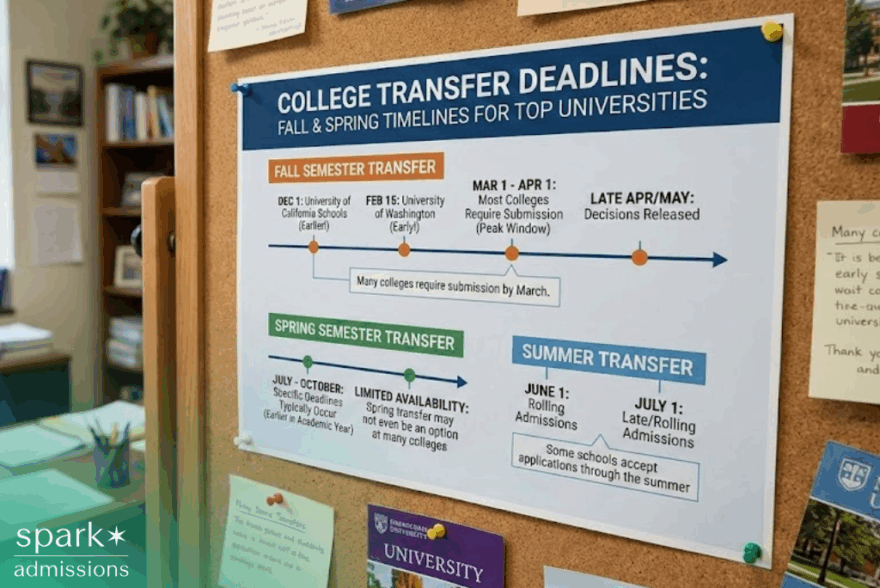
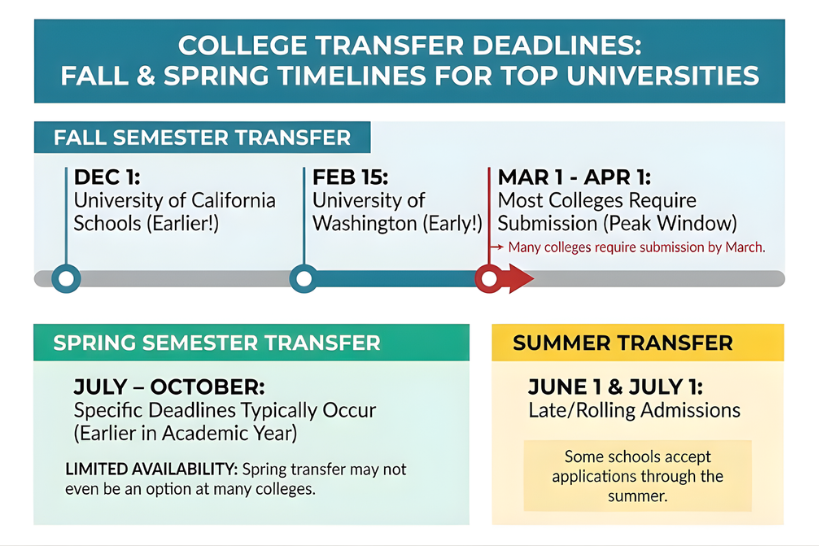
- Fall Transfer Deadlines: Many colleges require submission by March, with decisions released in late April or May. They typically range from March 1 to April 1, but some have earlier deadlines, like December 1 for the University of California schools or February 15 for the University of Washington.
- Spring Semester Transfer Deadlines: Expect them to be earlier in the academic year, and spring transfer may not even be an option at many colleges. Specific deadlines typically occur between July and October.
- Summer Transfer Deadlines: Some schools accept applications through the summer for late/rolling admissions, with deadlines such as June 1 and July 1.
- Dates Vary: Earlier deadlines may be relevant for competitive majors, limited enrollment programs, or applicants seeking financial aid. Transfer applicants should always confirm deadlines directly with each admissions office and review instructions carefully on the application page.
Rolling vs. Fixed College Transfer Deadlines
College transfer deadlines generally fall into two categories: rolling admissions and fixed deadlines.
Rolling transfer admissions allow applicants to submit materials over an extended period, with admissions offices reviewing applications as they are completed. Many colleges with rolling policies nevertheless encourage early submission because space in academic programs can fill quickly, even if the official date appears flexible.
Fixed transfer application deadlines are more rigid. These institutions require all materials, including official transcripts and completed forms, by a specific date. Missing a fixed deadline typically means waiting until the next admission cycle. Many Top 50 universities use fixed deadlines for fall transfer admission and offer limited or no spring-semester transfer options.
Back-Planning the College Transfer Application Process
Successful transfer applicants begin planning at least six to nine months before the intended enrollment date. Because transfer admissions officers rely heavily on college coursework and academic performance to scrutinize applicants’ records, timing matters more than many students realize.
By early fall, students should identify colleges and academic programs that align with their intended major and long-term goals. This is also the time to confirm transfer eligibility requirements, including minimum credits, GPA thresholds, and course prerequisites. Many colleges require applicants to complete a certain number of courses or reach junior standing before they transfer.
By late fall or early winter, students should begin the Common App transfer application and request official transcripts from every institution they’ve attended, including community colleges, undergraduate institutions, and, in many cases, even their high school. Transcript requests often take weeks to process, especially when sent through third-party services.
Mid-term reports, letters of recommendation, and college reports typically follow. These materials must often be submitted directly by a college official or school official, not the student. Waiting until the application deadline to request them is one of the most common reasons why a student’s transfer applications remain incomplete.
Transfer Application Requirements You Should Expect
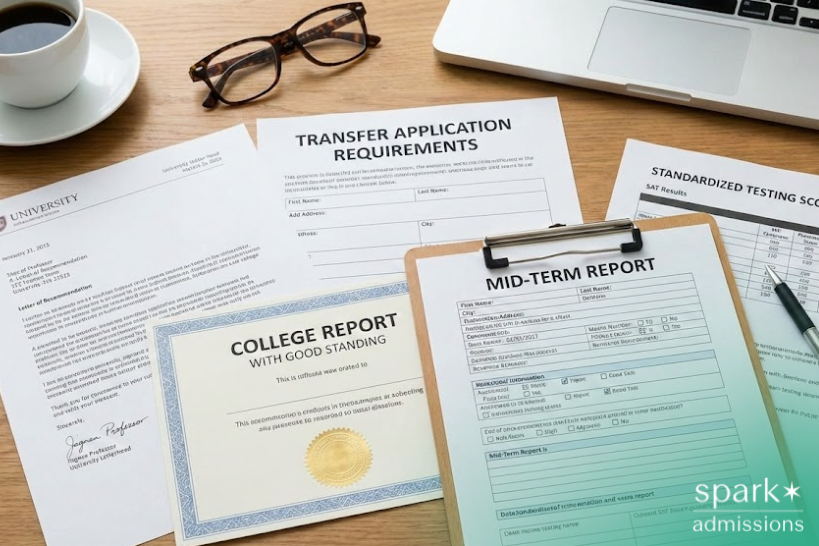
Transfer admissions requirements are more extensive than those for first-year applications. In addition to the transfer application itself, most colleges require official transcripts from all colleges attended, and many still request a high school transcript even for students well into their college experience.
Letters of recommendation are often needed, particularly from professors who can speak to academic performance at the college level. Some institutions also request a college report verifying good standing at the current institution. Finally, transfer applicants may need to submit a mid-term report showing current grades for in-progress coursework.
Standardized testing policies vary widely. Some colleges waive test scores entirely for transfer students, while others consider standardized testing depending on how many college credits have been completed. Dual enrollment coursework taken during high school may also factor into how test scores are evaluated.
Financial Aid Deadlines and Transfer Students
Financial aid is one of the most overlooked aspects of college transfer deadlines. Transfer students often assume aid timelines mirror admission deadlines, but this is rarely the case. Financial aid materials frequently have earlier deadlines than the transfer application itself.
The FAFSA and institutional aid forms may be due weeks before transfer application deadlines. Some colleges offer limited financial aid funding for transfer applicants, particularly at private colleges. Missing a financial aid deadline can therefore significantly reduce access to grants, scholarships, and fee waiver opportunities.
Credits may not always transfer evenly, which can affect financial aid eligibility and time to degree. Moreover, many colleges limit the number of credits that apply toward a bachelor’s degree, even if coursework is accepted. Such policies can increase a student’s total cost and extend enrollment timelines.
Late Transfer Options and Associated Risks
Applying after the transfer application deadlines significantly limits your options. Some colleges allow late submissions only if space remains available, and academic programs may already be full. Late applicants may also lose access to financial aid, housing, and priority course registration.
Spring semester transfer can be a viable alternative for students who miss fall deadlines, but fewer colleges offer spring admission, and academic integration may be more challenging mid-year. Students considering late transfer should weigh the risks carefully and explore whether waiting for the next fall cycle could result in better outcomes.
Impact of Transferring on Credits and Degree Progress
Credit transfer is not guaranteed, even for strong academic records. Colleges evaluate coursework based on content, rigor, grades, and alignment with academic programs. Courses taken at a community college may transfer differently from those completed at a four-year institution.
Some colleges cap transferable credits, while others require students to complete a minimum number of courses on campus before awarding a degree. Transfer students should review articulation agreements, department policies, and intended major requirements before submitting applications.
Academic advisors and admissions offices can clarify how credits may apply, but final decisions are often made after enrollment. Planning ahead helps students avoid delayed graduation or unexpected gaps in degree requirements.

Talk to a Transfer Expert Before You Submit
Before reviewing any master list of deadlines or transfer application requirements, it is worth speaking with a transfer admissions expert. Transfer students often underestimate how long it takes to request transcripts, secure letters of recommendation, and submit financial aid materials–but an advisor can help you manage all this and more.
Strategic planning early in the process can be the difference between enrolling next fall or delaying your transfer plans by an entire year.
FAQ: College Transfer Deadlines and Strategy
We can help by answering your questions, so you never miss a deadline.
When should transfer applicants start the application process?
Most successful transfer students begin preparing six to nine months before application deadlines. This approach allows time to request transcripts, complete required forms, and address financial aid materials without rushing.
Do all colleges accept spring semester transfer students?
No. Many colleges only admit transfer students for fall enrollment. Spring semester transfer options are more common at public universities and less common at highly selective private institutions.
Is the Common Application required for transfer admission?
Many colleges use the Common Application’s transfer materials, but some institutions instead rely upon their own application or supplemental materials. Applicants should always confirm the required application platforms and instructions at each school on their list.
How important are college grades to your transfer admissions chances?
Academic performance in college coursework is one of the most important factors in transfer admissions decisions. Admissions offices prioritize recent grades over high school performance, especially for students with substantial college credit.
Can transfer students receive a fee waiver?
Yes. Many colleges offer application fee waivers based on financial need, participation in certain programs, or eligibility criteria outlined by the institution. Requests typically must be submitted before completing the application.
Level Up Your Transfer Strategy
College transfer deadlines are not just dates on a calendar; they shape access to academic programs, financial aid, and long-term opportunities. Transfer students who plan early, understand requirements, and submit complete materials on time position themselves for the strongest possible outcomes.
At Spark Admissions, we provide expert guidance on every step of preparing for and applying to college, whether as a freshman applicant or a potential transfer. Our team also supports leadership development, communication skills, and thoughtful academic exploration that can strengthen transfer applications. Contact Spark Admissions to help your transfer student gain a strategic partner focused on both their admission success and long-term growth.
About The Author