
- Blog
- > College Admissions
College Admissions: High-Achieving Students with ADHD/LD
- Dr. Rachel Rubin
- | January 20, 2026

High-achieving students with attention deficit hyperactivity disorder (ADHD) and learning disabilities (LD) often face a confusing and emotionally charged college admissions process. These students may earn strong grades, pursue advanced coursework, and demonstrate intellectual curiosity, yet still struggle with executive functioning, standardized testing, or inconsistent academic performance.
Families frequently ask whether colleges accept students with learning differences, how to disclose ADHD, and what support services truly matter after enrollment.
The reality is that pursuing college admissions for high-achieving students with ADHD and LD is not about lowering standards. It is about understanding how admissions offices evaluate context, how to advocate effectively, and how to identify colleges that support long-term undergraduate success. With the right strategy, students with learning disabilities can thrive at Top 50 institutions and beyond.
How Students with ADHD and Learning Disabilities Fare in College
ADHD and specific learning disabilities affect how students process information, manage time, and demonstrate mastery. Many students with learning disabilities excel academically but expend significantly more effort than their typical peers. Others experience gaps between ability and performance due to executive functioning challenges, fine motor coordination issues, or processing speed differences.
In elementary school and secondary school, students may receive support through an Individualized Education Program or Section 504 plan under the Disabilities Education Act. These protections, however, change significantly at the college level. Colleges are governed by the Disabilities Act, which requires reasonable accommodations but places the responsibility on students to request and manage support.
College Admissions and Standardized Testing with ADHD
Standardized testing remains a challenge for many students with ADHD and learning disabilities. Extended time is among the most common appropriate accommodations approved by the College Board and ACT. However, disability documentation must meet specific criteria, and families should plan early to avoid delays during a student’s junior and senior year.
That said, test scores are considered contextually at most colleges. Moreover, many colleges now adopt test-optional policies, which can benefit students whose standardized testing does not reflect their overall academic ability. Strategic testing decisions should align with the student’s academic record, learning needs, and target schools.
Executive Functioning and College Readiness
Executive functioning support is one of the most critical factors for college success among students with ADHD. Time management, planning, organization, and task initiation become significantly more demanding in college. High-achieving students who relied on parent or teacher scaffolding in high school must transition to a state of greater independence.
Colleges vary widely in the academic support they offer students. Some provide structured programs, peer tutors, math centers, academic coaching, and assistive technology, while others limit services to accommodations only. Identifying colleges with strong executive functioning support will be essential for your student’s long-term academic success.
Self-Advocacy as a College Readiness Skill
Self-advocacy skills are essential for students with learning disabilities who attend college. Unlike high school, colleges do not monitor progress or initiate accommodations. Students must contact the disability services office, submit disability documentation, communicate with professors, and request reasonable accommodations each term.
Developing self-advocacy skills before senior year will therefore improve your student’s college readiness–and their overall confidence. Students who understand their learning styles, can articulate their needs, and use assistive technology effectively will be more likely to succeed academically and socially as undergraduates.
How Admissions Offices View Learning Differences
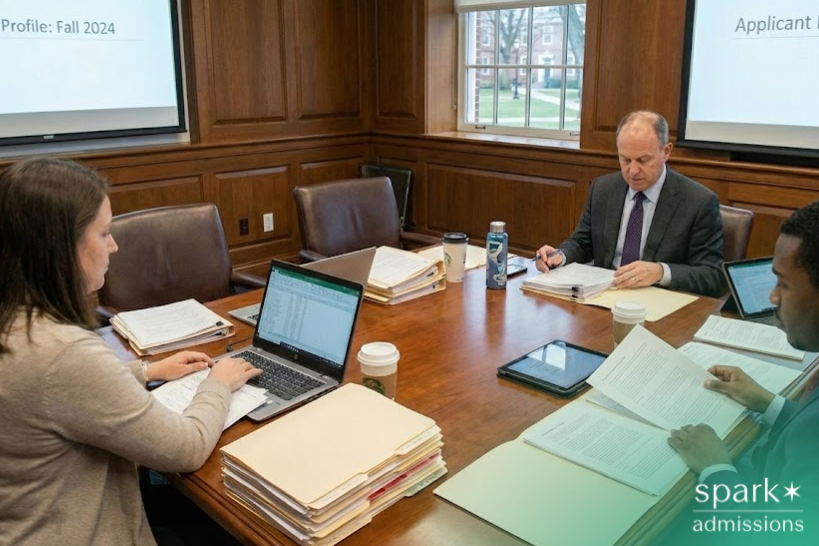
A common myth is that colleges reject students with disabilities or penalize ADHD disclosure. In reality, admissions deans and admissions officers evaluate applications holistically. Ultimately, colleges seek students who demonstrate intellectual engagement, resilience, and readiness for college-level work, and many universities actively accept students with learning disabilities and have robust disability support services.
Admissions committees review each applicant’s academic record within the context of their school environment. When learning differences have influenced grades, course selection, or standardized testing, thoughtful explanation can help admissions officers understand the student’s trajectory. High-achieving students with ADHD often benefit from contextualizing performance rather than hiding challenges.
Disclosure Decisions in the College Application Process
Deciding whether to disclose ADHD or learning disabilities during the college application process is a strategic choice. Disclosure is never required, and diagnosis alone does not provide an admissions advantage. However, when learning differences have shaped the academic journey, disclosure can clarify inconsistencies and highlight growth.
Disclosure is typically done through the personal essay, an additional information section, or counselor recommendations. Effective disclosure focuses on self-advocacy, strategies developed, and academic success rather than any diagnosis in and of itself.
Admissions offices respond best when students demonstrate insight, ownership, and readiness to manage learning needs independently. Work with a college admissions counselor to weigh your options for how to present yourself in the strongest possible light.
Identifying Colleges with Strong Support Services
A disability services office will often play a central role in student success for individuals with learning disabilities or ADHD. Families should evaluate how disability support services operate at each school on a student’s list, how accommodations are approved, and whether services are proactive or reactive. Some colleges offer fee-based programs with enhanced academic support, while others integrate services into general academic advising.
Community college can also serve as a strong starting point for some students, offering smaller class sizes, structured support, and a gradual transition to college-level expectations. Many students later transfer successfully to four-year colleges with a stronger academic foundation.
Transition Planning from High School to College
Transition planning should begin well before senior year. High school students benefit from practicing independence, managing deadlines, and advocating for themselves. Guidance counselors, academic advisors, and career counselors can support this transition by helping students identify colleges aligned with their learning needs and career goals.
Visiting colleges and meeting with disability services staff will provide further insight into campus culture and expectations. These conversations often reveal differences that are not visible in marketing materials or rankings.

ADHD, LD, and Long-Term Academic Success
Students with ADHD and learning disabilities can and do succeed in higher education, graduate school, and professional programs, including law school and medical school. Success depends less on diagnosis and more on fit, preparation, self-advocacy, and support.
High-achieving students who understand their brain, leverage their strengths, and seek appropriate accommodations are well-positioned to thrive at the college level. The admissions process doesn’t have to be a barrier when it’s approached strategically.
FAQs
Let’s answer some of your most common questions before you make any big decisions regarding your child’s academic future.
What are some myths about college admissions for students with disabilities?
A persistent myth is that colleges automatically reject students with disabilities. In reality, most colleges enroll students with ADHD, learning disabilities, and autism spectrum diagnoses every year.
Another misconception is that accommodations weaken academic standards, when in fact they provide access, not advantage.
Some families assume private colleges offer better support than public institutions, but support services vary widely across both types of institutions. The key factor is institutional commitment, staffing, and program structure, not school type alone.
What are the support services and accommodations in college for students with ADHD and LD?
Common accommodations include extended time, reduced-distraction testing environments, note-taking support, assistive technology, and priority registration. Disability services offices coordinate these supports, but students must remain engaged throughout the process.
Educational support may also include peer tutors, academic coaching, structured study programs, and advising tailored to students with various learning needs. These services significantly influence college success, particularly during the first year.
Can students with ADHD succeed at highly selective colleges?
Yes. High-achieving students with ADHD regularly attend Top 50 colleges and universities. Admissions deans increasingly recognize that learning differences are common among future leaders, entrepreneurs, and innovators. Success at selective institutions depends on academic preparation, realistic college selection, and the ability to access support services early, not on a student’s neurodiversity.
Plan for Success with College Admissions Counseling
College admissions for high-achieving students with ADHD and learning disabilities require nuance, expertise, and individualized planning. The right approach aligns academic preparation, self-advocacy, disclosure strategy, and college selection to support both admission and long-term success.
At Spark Admissions, we help students navigate the academic demands of high school, build executive functioning skills, and gain practical experience. We also support leadership development, communication abilities, and the exploration of academic and extracurricular interests.
Contact Spark Admissions to help your student with ADHD and learning disabilities succeed in college admissions and beyond.
About The Author