
- Blog
- > College Admissions
College Admissions: High-Achieving Students with Autism
- Dr. Rachel Rubin
- | January 27, 2026

The current college admissions landscape presents a unique mix of opportunity and complexity for high-achieving students with autism. Many such individuals earn good grades, post strong standardized test scores, and demonstrate deep academic achievement in specific areas of interest. However, the transition from high school to college introduces new expectations around independence, executive functioning, social interactions, and self-advocacy that can feel overwhelming for both students and parents.
As more young adults on the autism spectrum pursue postsecondary education, colleges are expanding academic support, disability services, and residential programs designed to meet a wider range of learning differences. Still, navigating college admissions, evaluating programs, and planning for college life requires a thoughtful, individualized approach, especially for students who are academically advanced but may need targeted support systems to succeed academically and socially as undergraduates.
Here you’ll learn how the college admissions process works for high-achieving students with autism spectrum disorder, what colleges can and cannot see about accommodations, how to identify the right college environment, and which support strategies matter most for long-term success. Spark also offers personalized support for students with autism who are hoping to find their ideal college fit.
Related Article: Passion Projects in College Admissions: Do You Really Need One?
High Achievement and the Autism Spectrum
Autism spectrum disorder affects individuals differently, and many students with autism demonstrate exceptional strengths in academic work, analytical thinking, and focused interests. High-achieving autistic students often excel in structured academic settings, particularly in math, science, technology, or other areas that reward deep concentration and precision.
However, strong academic performance does not eliminate the need for support. Executive functioning challenges, social aspects of college life, and independent living skills can become more demanding in postsecondary education. High school often provides individualized education programs, special education services, and consistent adult oversight that are no longer automatically available in college.
Recognizing this gap early is a good starting point for families planning ahead for college admissions and college life.
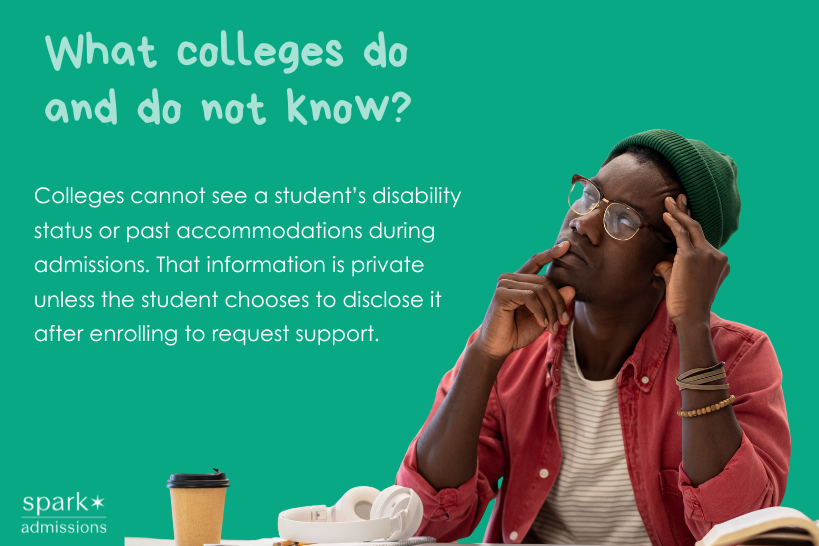
College Admissions and Autism: What Colleges Do and Do Not Know
One of the most common questions many parents ask is whether colleges will know if their child received special accommodations due to autism or other learning differences. The answer is no.
Under federal law, including the Disabilities Act and the Rehabilitation Act, colleges cannot ask applicants to disclose disability status, and accommodation history from high school is not shared during the college application process.
College admissions decisions are based on academic records, grades, course rigor, standardized test scores (when required), extracurricular involvement, and personal essays. Autism spectrum disorder, individualized education programs, and academic accommodations are not visible unless a student chooses to disclose them.
That said, after enrollment, students who want academic accommodations must register with the disability services office and provide documentation. This separation protects students’ privacy while ensuring access to reasonable accommodations once they begin their college education.
Key Differences Between High School and College Support
In high school, students with autism often receive structured academic support through individualized education programs, frequent check-ins, and built-in special education services. In college, the responsibility shifts to the student.
Most colleges offer disability services offices that coordinate academic accommodations such as extended time, assistive technology, note-taking support, and quiet testing environments. However, colleges do not monitor progress in the same way. Self-advocacy skills, self-awareness, and the ability to request help thus prove critical to academic success.
For high-achieving students with autism, this shift can feel abrupt. Those who succeed academically in college often work to build a support system from the outset, one that includes disability services, academic support programs, peer mentoring, mental health resources, and sometimes one-on-one coaching focused on executive functioning skills and time management.
Evaluating the Right College for Students with Autism
Choosing the right college goes beyond rankings or prestige. For students with autism, fit often matters more than the name on the diploma. The right college balances academic challenges with appropriate support services and a campus culture that understands neurodiversity.
Colleges vary widely in what they offer. Some provide basic accommodations through the disability services office only. Others offer comprehensive college accommodations, residential programs, or specialized autism spectrum support that integrates academic, social, and independent living skills development.
Important factors to evaluate include class sizes, availability of academic support, access to peer mentoring, mental health services, and housing options such as quiet dorm environments. Campuses that actively support social connections, structured social interactions, and community-building often help autistic students feel more comfortable navigating college life. Working with an admissions counselor for learning differences who has your student’s specific needs in mind will ensure you find the right fit.
Academic Support and Executive Functioning in College
Executive functioning plays a central role in college success. Planning assignments, managing time, organizing coursework, and balancing academic-year demands can be challenging for students on the autism spectrum, even those who earn good grades.
Strong academic support programs address these challenges directly. Offerings may include executive functioning coaching, one-on-one guidance, regular academic check-ins, and structured support systems that help students break down large tasks into manageable steps.
Assistive technology is another important tool. Many colleges provide software for note-taking, organization, and reading support that can significantly improve academic performance for students with autism and learning disabilities.

Social Skills, Mental Health, and College Experiences
Academic success alone does not define a positive college experience. Social skills, emotional support, and mental health resources are equally important for autistic students navigating college experiences for the first time.
College introduces new social aspects, from roommates and group projects to extracurricular activities and campus events. Some students with autism thrive socially when given structure and shared interests, while others need additional support to build social connections.
Colleges that offer peer mentoring, counseling services, and programs focused on social skills development often provide a safer, more inclusive environment. Access to mental health professionals familiar with autism spectrum disorder can also help students manage stress, anxiety, and transitions.
Community College and Alternative Pathways
For some students with autism, community college can be a strategic entry point into postsecondary education. Smaller class sizes, lower cost, and the ability to live at home while developing independent living skills can make community college a strong option.
Community college can also serve as a bridge, allowing students to build academic confidence, strengthen their executive functioning skills, and prepare for transfer to a four-year college with a clearer understanding of their support needs.
Financial Aid and Support Services
Financial aid is available to students with autism just as it is for other students. Disability status does not reduce eligibility for need-based or merit-based aid. Some colleges also offer vocational support or specialized funding for programs that serve students with learning differences.
Families should review not only tuition, but also the cost of additional services provided through specialized support programs, as these can vary significantly across institutions.
FAQ: College Admissions for High-Achieving Students with Autism
Learn about the accommodations offered in college, so that you can thrive post-high school.
Do colleges accept students with autism at the same level as other students?
Yes. Colleges evaluate students based on academic achievement and application strength, not disability status.
Are accommodations guaranteed in college?
Reasonable accommodations are required under federal law, but students must request them through the disability services office.
Can autistic students succeed academically in Top 50 colleges?
Many do, particularly when the college environment matches their learning style and support needs.
What supports matter most for success?
Executive functioning support, academic accommodations, peer mentoring, mental health resources, and self-advocacy skills are key factors.
We Can Help Students with Autism Navigate the College Admissions Process
High-achieving students with autism often require careful planning, honest self-assessment, and a focus on long-term success rather than short-term prestige in order to thrive amidst the competitive admissions landscape. Nevertheless, with the right preparation, students with autism spectrum disorder can succeed academically, build meaningful college experiences, and transition confidently into adulthood.
At Spark Admissions, we guide you through every step of preparing for and applying to college. We view the college preparation period as a time for skill-set development, particularly for students with autism spectrum disorder and other learning differences. Get in contact with Spark Admissions; we help high-achieving students with autism find the right college and thrive once they arrive.
About The Author