- Blog
- > Private School Admissions
Private School Admissions Checklist for 2026
- Dr. Rachel Rubin
- | December 17, 2025

Applying to private high schools can feel overwhelming, especially for parents and families navigating the admissions process for the first time. Most private schools expect students to demonstrate academic preparation, strong character, and meaningful interest in the school community, all while staying on top of many deadlines.
Below is a detailed private high school admissions timeline for 2026 that explains what to do, when to do it, and how to prepare your child to submit the strongest possible application.
Researching Schools and Building Your Admissions Plan
Most private schools begin their admissions cycle a full year before enrollment, which means that families should start researching private schools during the spring and summer. This early stage is your opportunity to learn about each school’s curriculum, classroom philosophy, school environment, arts programs, extracurricular activities, community service expectations, and additional costs such as uniforms, books, and transportation.
This phase also helps you understand the differences among private schools, including independent school models, faith-based programs, and highly competitive Top 50 boarding and day schools, as well as the broader differences between private and public high schools and how each pathway can impact college admissions. Prospective students and parents should attend open houses and admissions events, participate in virtual tours, and speak directly with admissions committee representatives whenever possible. These conversations help families determine whether a school community is a good fit for their child’s academic goals, interests, and learning style.
As you finalize your list of schools, remember that many schools expect well-rounded students who show curiosity, initiative, and leadership. Carefully reviewing each school’s expectations early will make it easier to plan ahead and prepare all required materials.
Take Note of the Private High School Admissions Timeline
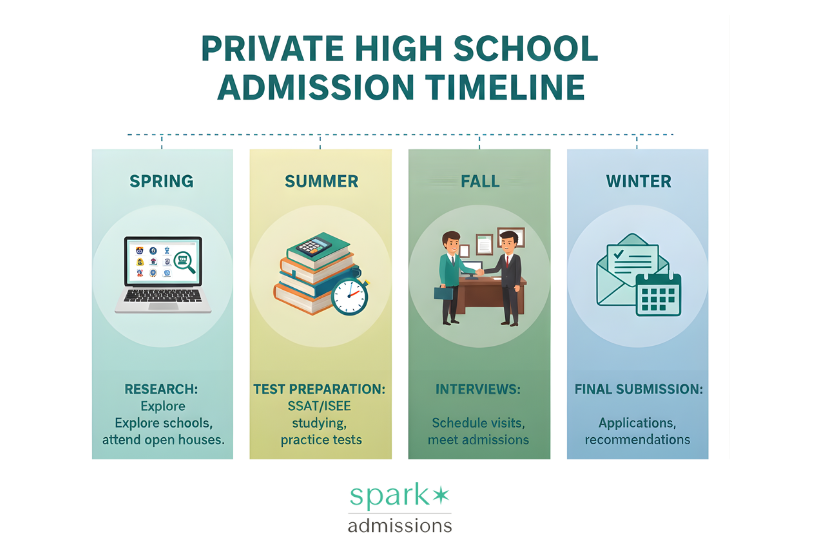
The private high school admissions timeline follows a predictable structure, though deadlines vary slightly between schools. Most private school applications open in September, with application materials due near mid-January.
A strong private school admission timeline typically includes research in the spring, test preparation in the summer, interviews in the fall, and final submission during the winter. Parents can help their child stay on track by using calendars, apps, or notes to set reminders, double-checking requirements, and gathering documents in advance. This kind of careful planning makes a significant difference and reduces stress as deadlines approach.
SSAT/ISEE Timeline and Preparation
Standardized test scores remain one of the most common components of private school applications. Most private schools accept either the SSAT or the ISEE, though some prefer one exam. The SSAT/ISEE timeline for 2026 applicants will typically begin with summer or early fall preparation, followed by testing dates between September and December.
Families should create a study plan that addresses their child’s challenges in math, reading, and verbal reasoning. Many students benefit from working with a tutor, using official practice tests, and reviewing strategies that improve pacing and accuracy. These scores help admissions committees understand academic readiness, so preparing in advance gives students an advantage.
Teacher Recommendations, Transcripts, and Other Application Materials
Private school admissions require several components beyond testing. Families should request recommendation letters from teachers at their current school early in the fall. Teachers appreciate time to write thoughtful descriptions of a student’s academic growth, classroom engagement, and interest in learning. Transcripts and grades from the current school also play an important role, as many schools look for intellectually curious applicants who demonstrate consistent effort.
Some private schools ask for essays, personal statements, or short-answer responses. These writing pieces allow applicants to demonstrate authentic interest, reflect on challenges, and share experiences that have shaped them. Parents can encourage students to write drafts, revise, and seek feedback so that each response feels genuine and polished.

Interviews and Admissions Events
Interviews are a central part of the admissions process. Private school interview questions typically explore a student’s interests, strengths, extracurricular activities, leadership qualities, and motivations for applying. Students should prepare by practicing clear, confident answers and reviewing examples of times they contributed to their school community.
Families should also attend admissions events or open houses, whether in person or virtually. These events provide a great opportunity to learn more about the school environment, meet current students, and understand how applicants can contribute to the school community.
Financial Aid Applications, Deadlines, and Planning
Families applying for financial aid must submit financial aid applications through services like SSS or FACTS. It is important to submit financial aid applications and supporting documents well before financial aid deadlines, which often fall shortly after the application deadline.
Planning early ensures that parents have time to gather tax forms, estimate additional costs, and understand each school’s tuition expectations. Many schools offer financial assistance to eligible families, but funds are limited and often awarded on a first-come, first-served basis.
Submitting All Private School Applications
Once interviews, testing, transcripts, and recommendations are complete, families can finalize and submit their private school applications. The application process typically ends in mid-January, and admissions decisions are released in March. Applicants should review every form carefully, ensuring that names, dates, essays, transcripts, and recommendation letters are correct. Staying organized is the key to completing everything in a timely manner.
As admissions decisions arrive, parents should revisit priorities such as school environment, curriculum, community fit, and opportunities in arts, athletics, leadership, and extracurricular activities. Families should also consider logistical factors such as transportation, additional costs, scholarships, and academic support resources.
Achieve Your Academic Goals Pre-College
Applying to private high schools requires preparation, planning, and awareness of many deadlines. When families approach the process with a structured private school admissions checklist, students gain clarity and confidence. Whether your child is exploring independent school options for more rigorous academics, smaller class sizes, or a more personalized school community, each step of the admissions process offers a chance to demonstrate readiness and enthusiasm.
Spark Admissions provides expert, highly personalized guidance through every stage of the private high school and college application process. Our team understands how many schools evaluate applicants, how to prepare for interviews, how to strengthen academic and extracurricular profiles, and how to create polished application materials that communicate both character and potential.
We offer comprehensive support that extends far beyond the application process itself. Our goal is to help your child grow, succeed, and become the strongest possible candidate for top private schools and future college opportunities. Schedule a consultation with us today.
About The Author